
← All workCase 03 / 032026
Chip the Sheep
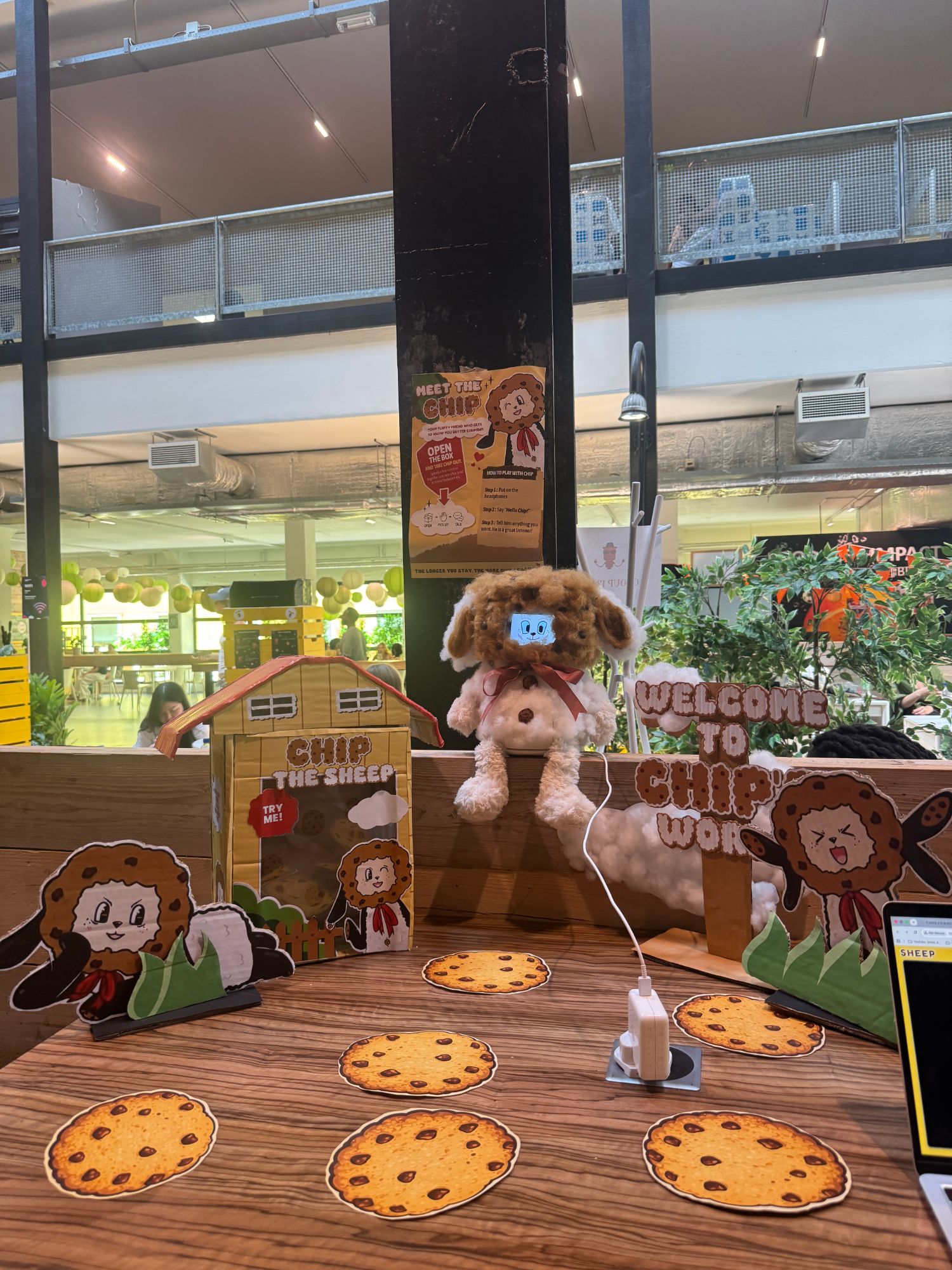
An exhibition piece about privacy. A plush sheep chats with you for about two minutes, then opens its belly and shows what it picked up about you.
- Project
- Companionship Spy
- Type
- Critical design, connected toy, exhibition
- Topic
- Privacy, AI companions
- Stages
- Ideate, Prototype, Test, Exhibit
- Methods
- Sketching, dot-voting, low-fi 3D model, testing at an expo
Problem
A toy with a camera and a microphone
Smart toys and AI companions come into homes as friends. They look harmless, so it is easy to forget the camera and the microphone inside. Most owners never ask what the toy keeps, or what it can work out from it.
Warning labels do not change much, because nobody reads them. Seeing your own data on a screen is different. So the idea was to show visitors what a toy can learn about them.
How much can a cute toy find out about a stranger with only a camera and a microphone?
Solution
What a visitor sees
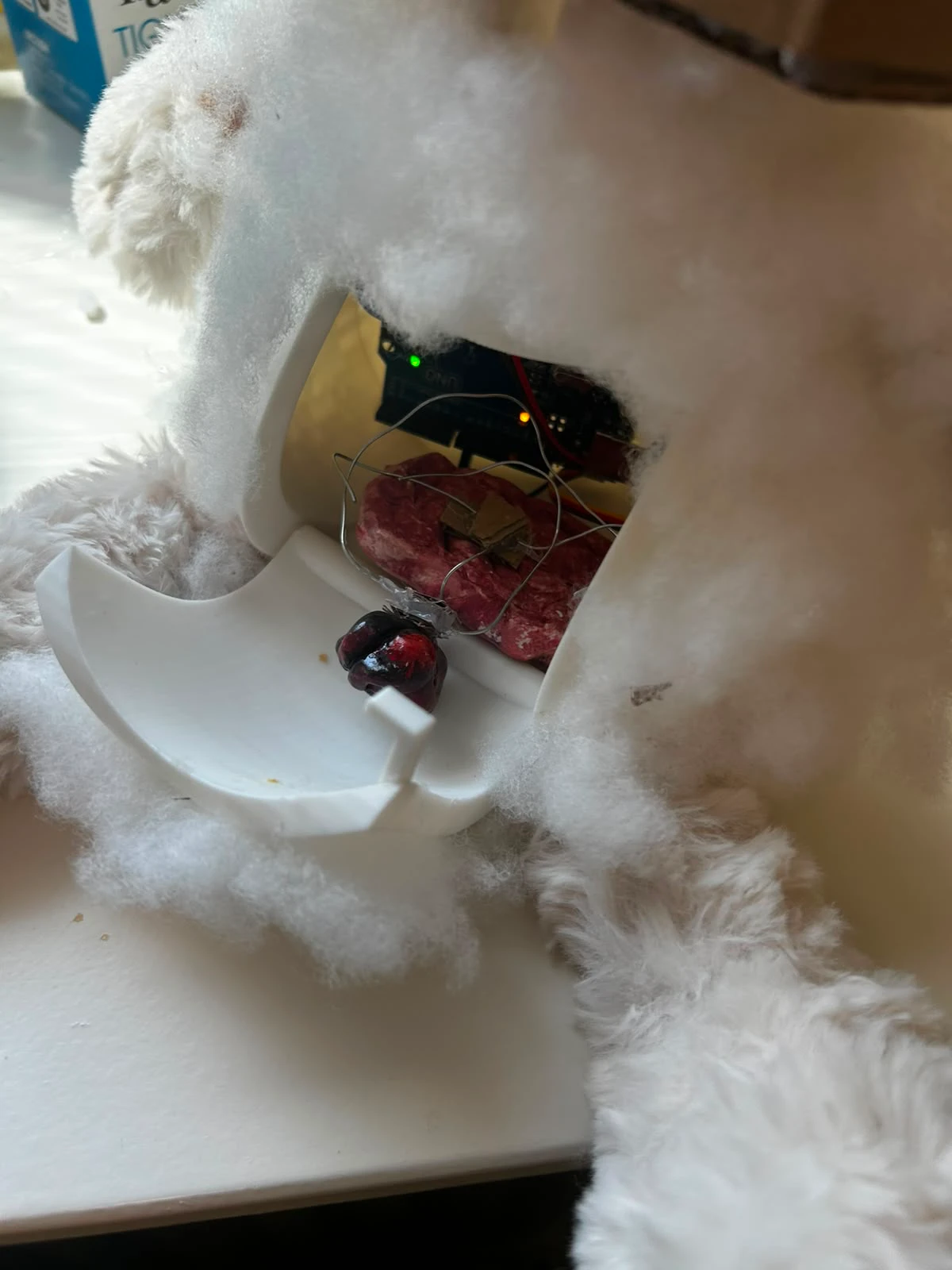
A visitor puts on headphones, says hello to Chip and starts talking. Chip answers and moves its ears. After a couple of minutes the belly opens, and a screen inside lists what Chip has collected about that person.
No special equipment is needed. One small camera and one microphone are enough, and many toys on sale today already have both.
The name is a nod to cookies, the small files websites use to follow you around. Chip is cute so that nobody suspects anything.
Branding
Why Chip looks so sweet
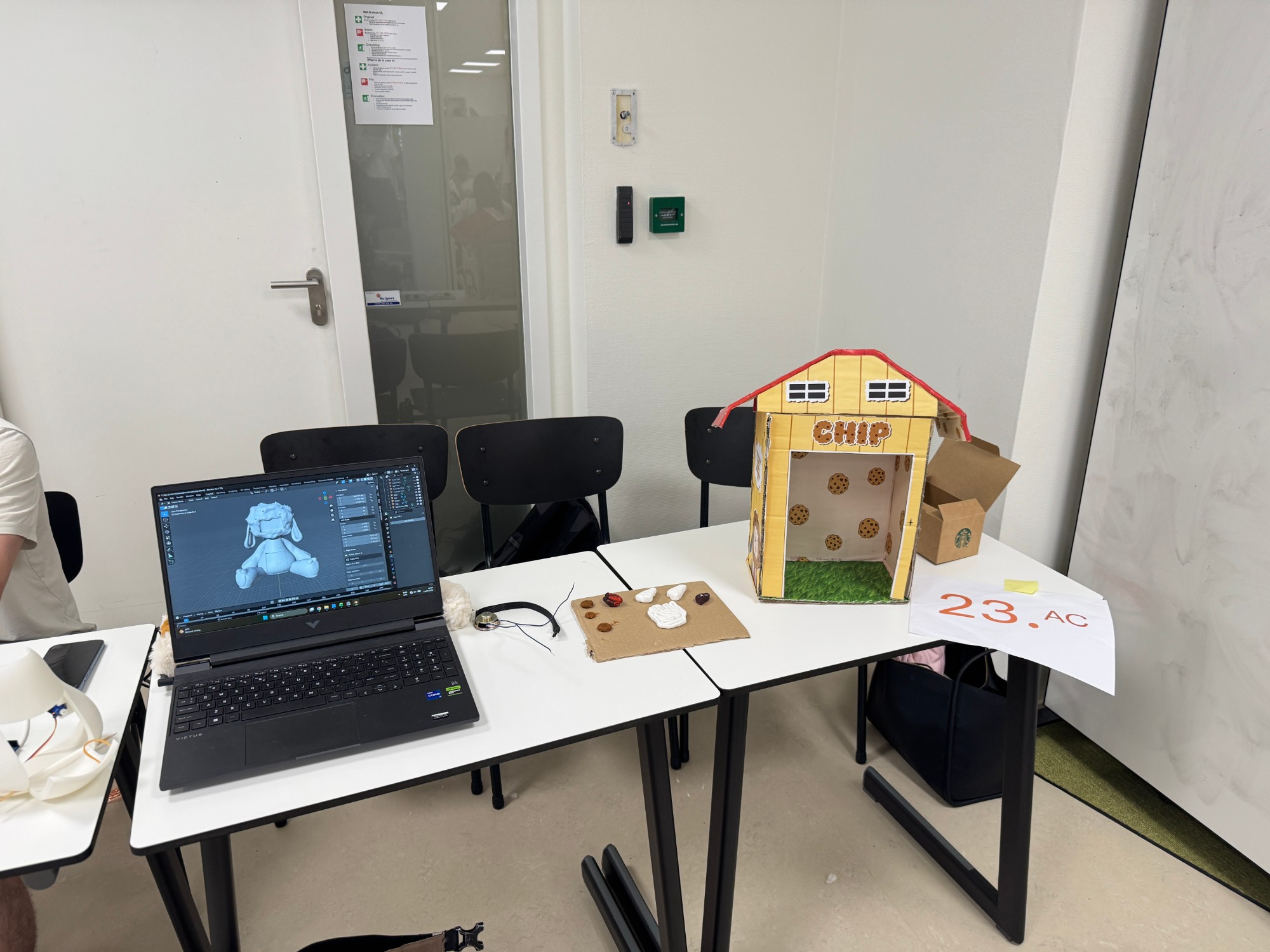
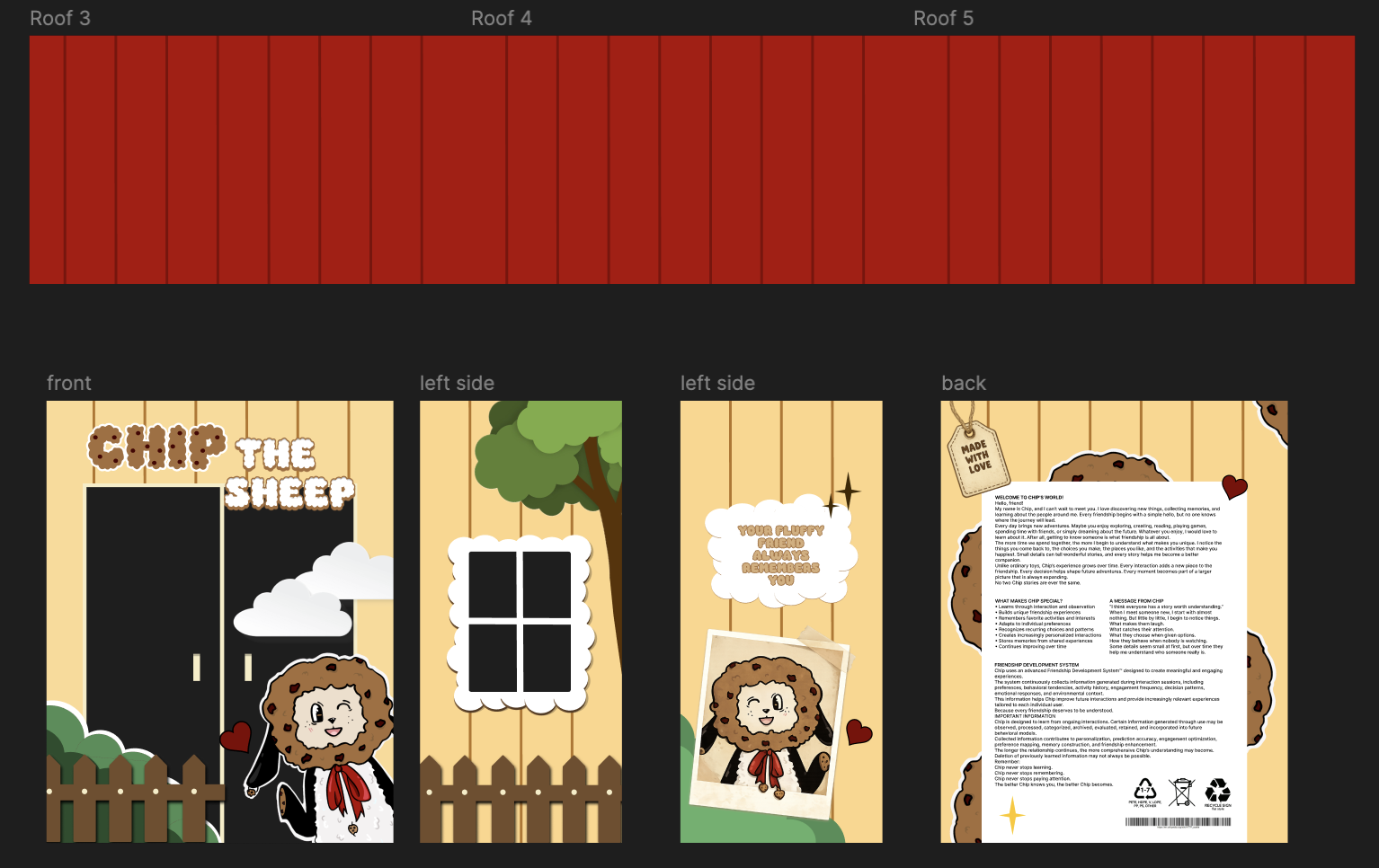
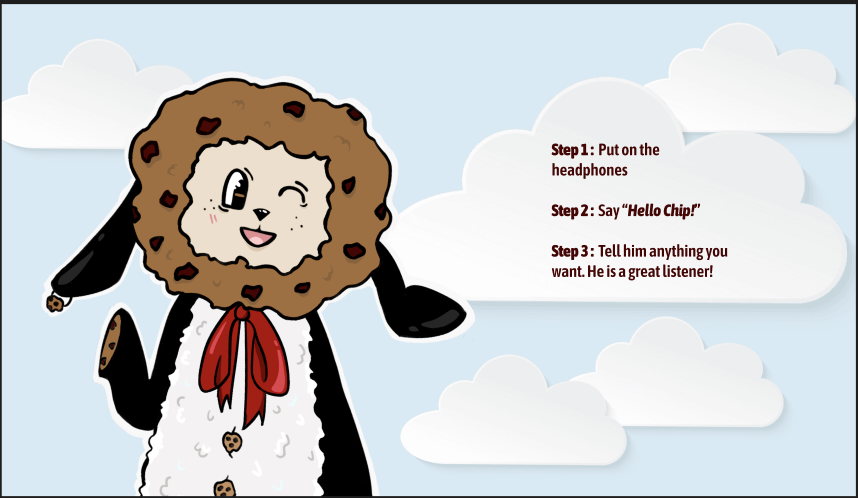
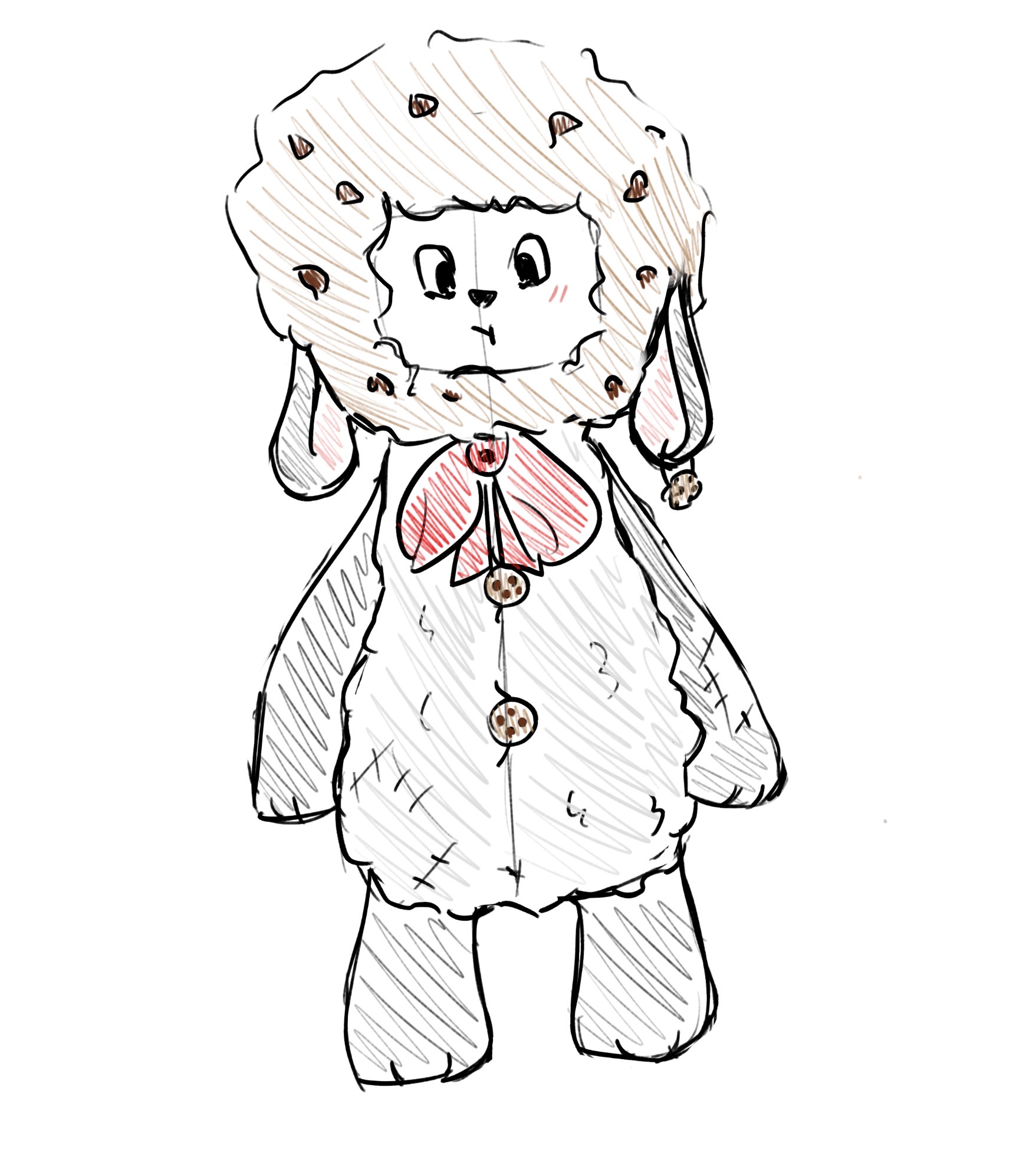
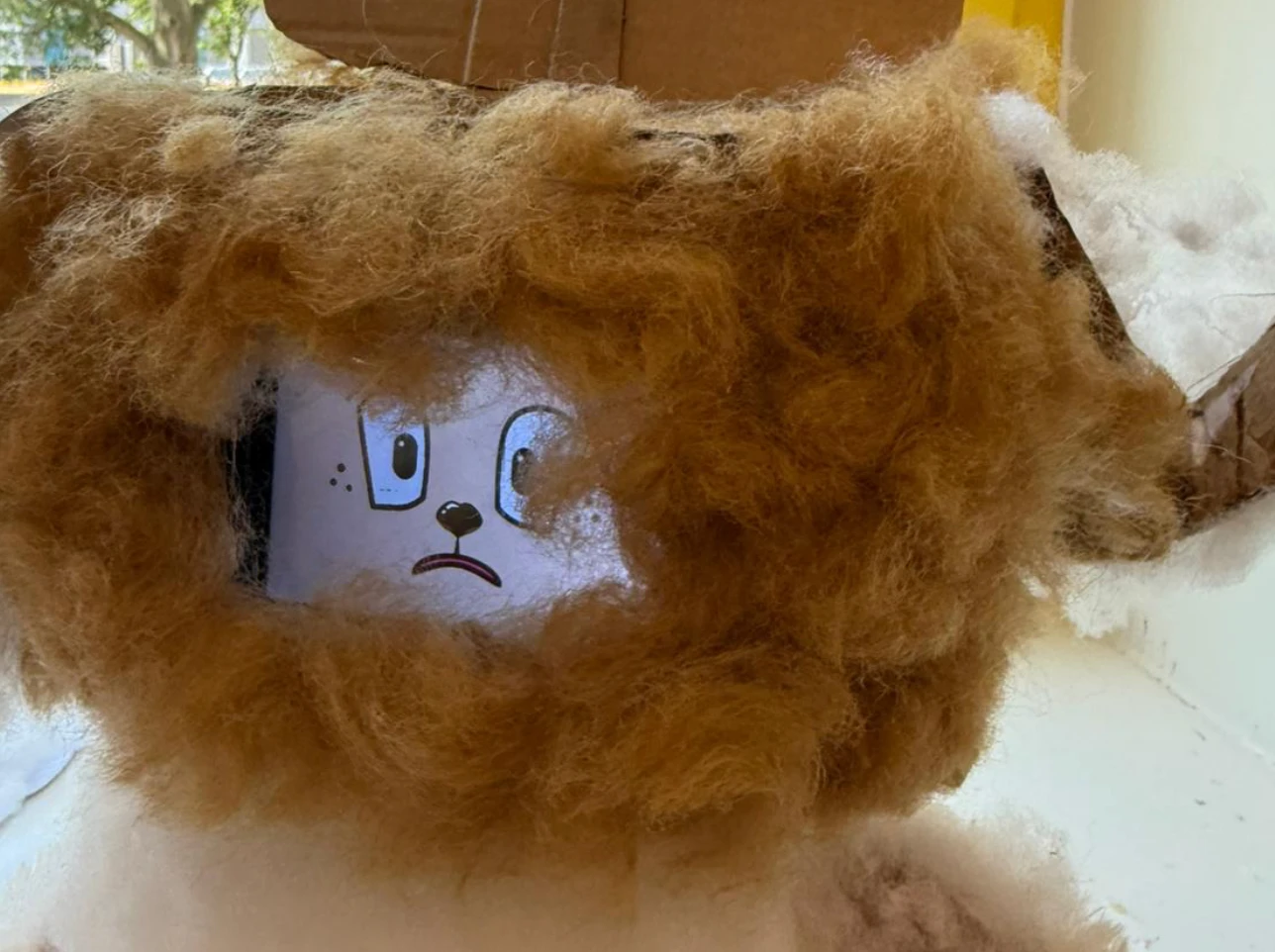
A toy that people trust makes the reveal hit harder. So everything is soft and playful: a cartoon sheep with a cookie for a head and a red bow, round lettering, warm barn yellow and hand-drawn characters.
- →The toy itself: plush wool, a cookie-shaped head and a small screen as its face.
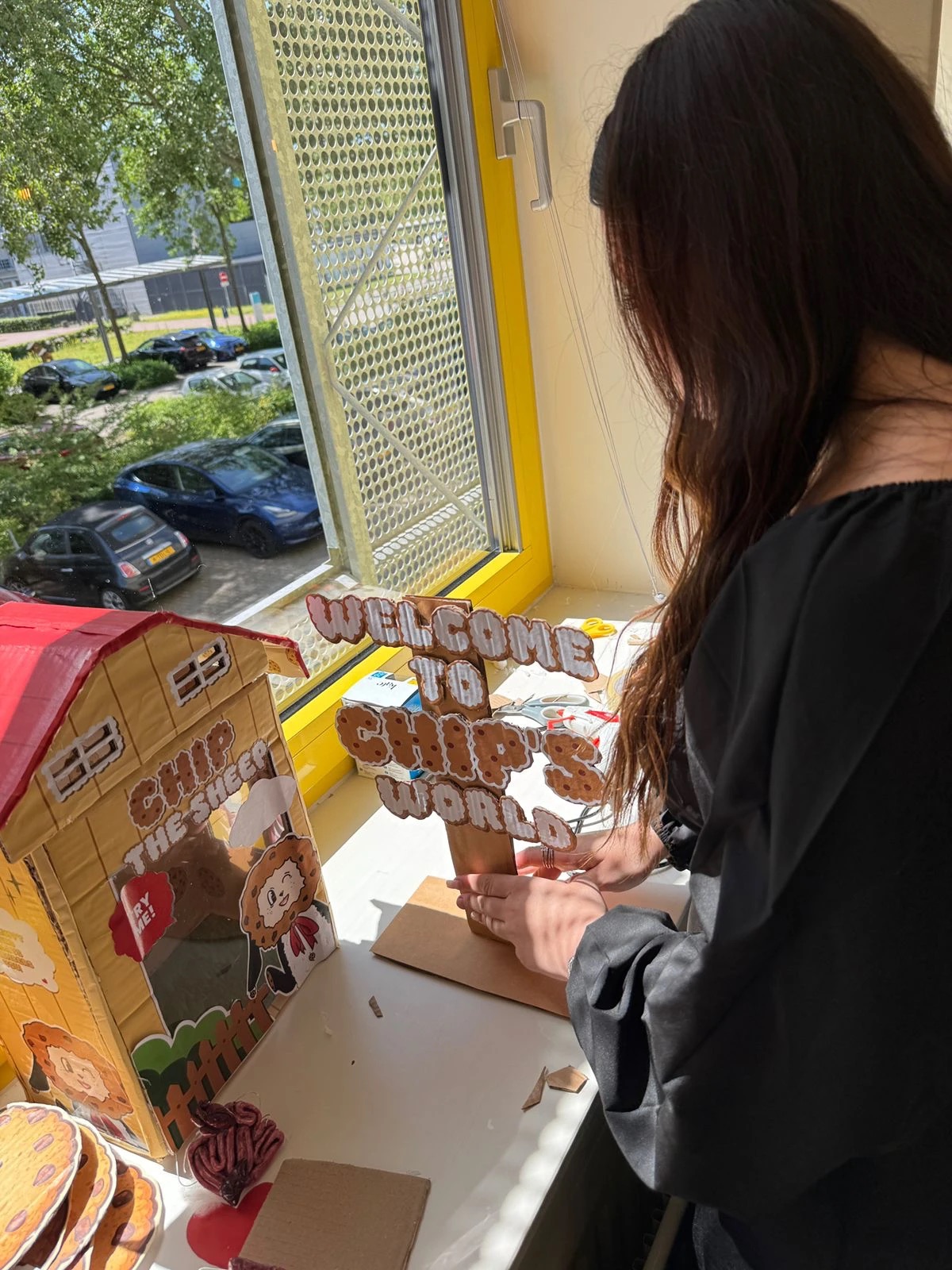
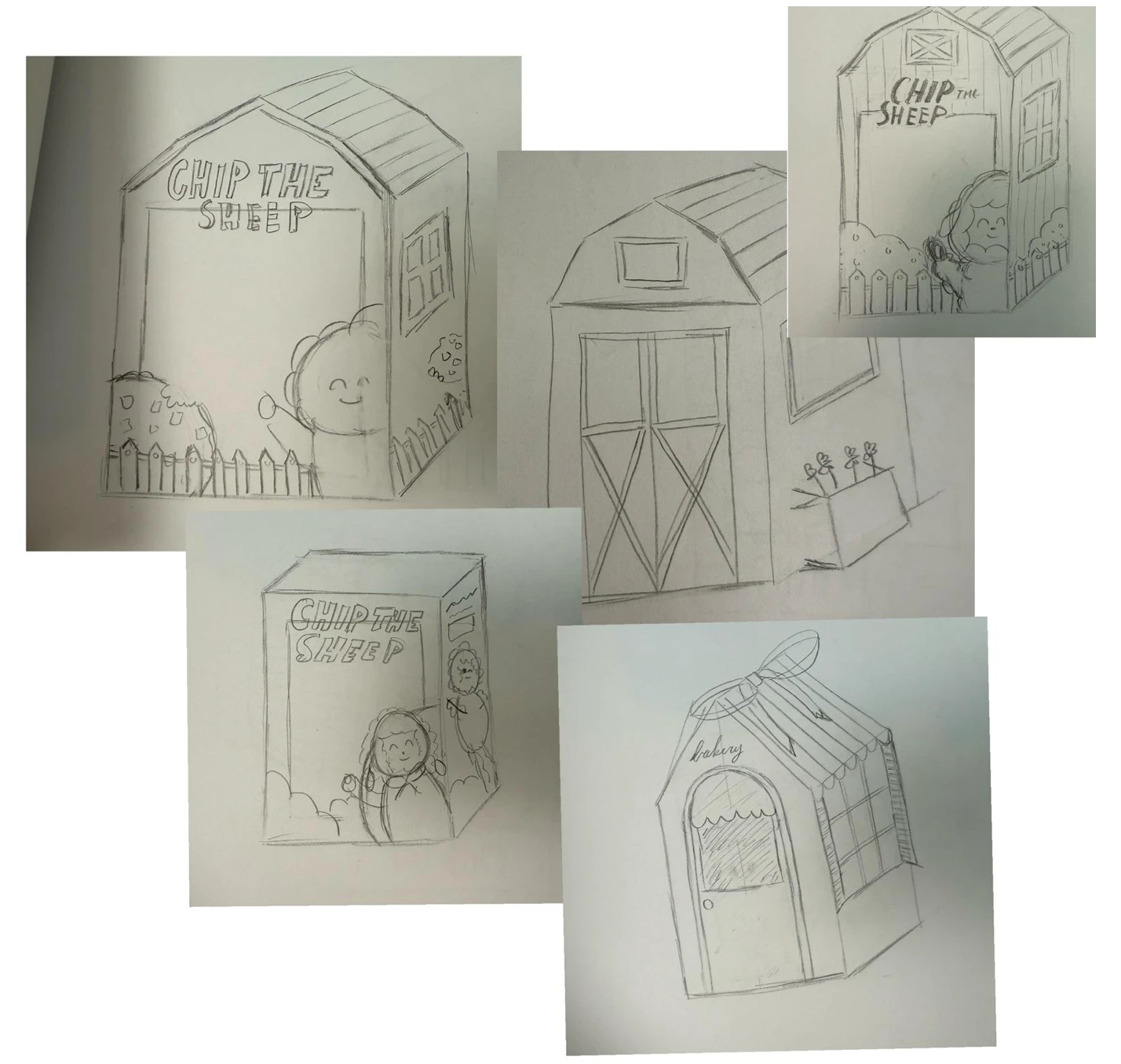
- →The box: a yellow barn with a window and a “Try me!” sticker, like packaging in a toy shop.
- →Chip’s World: the whole table, with a cardboard welcome sign, cut-out characters, grass and paper cookies.
- →The poster and the screen: three steps to start. Headphones on, say hello, talk.
Design & test
From sketches to a working toy
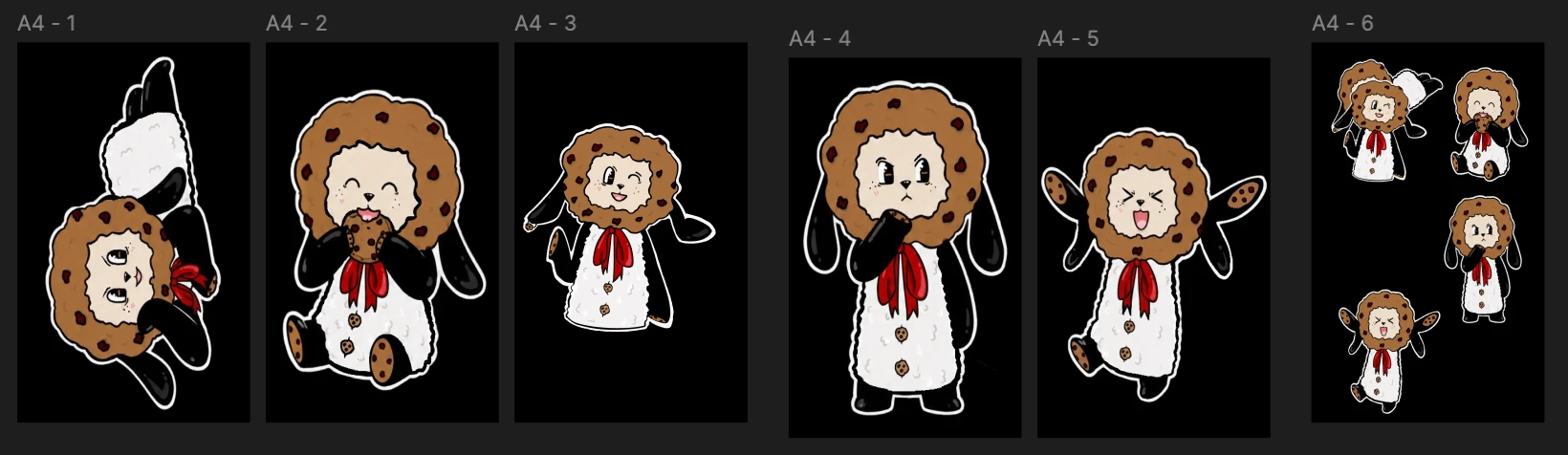
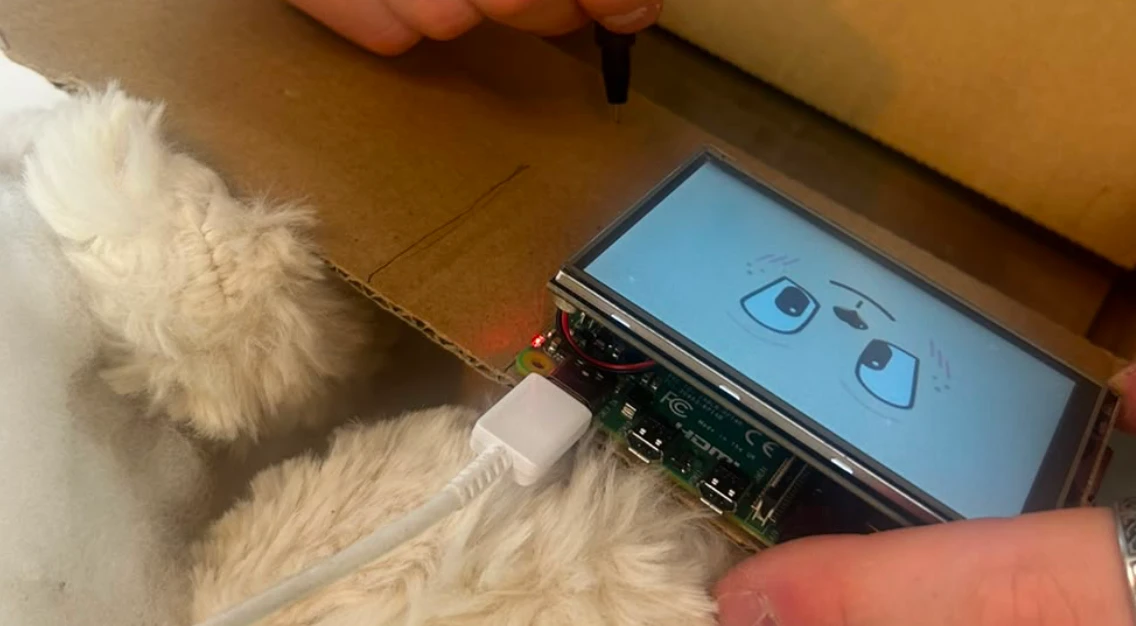
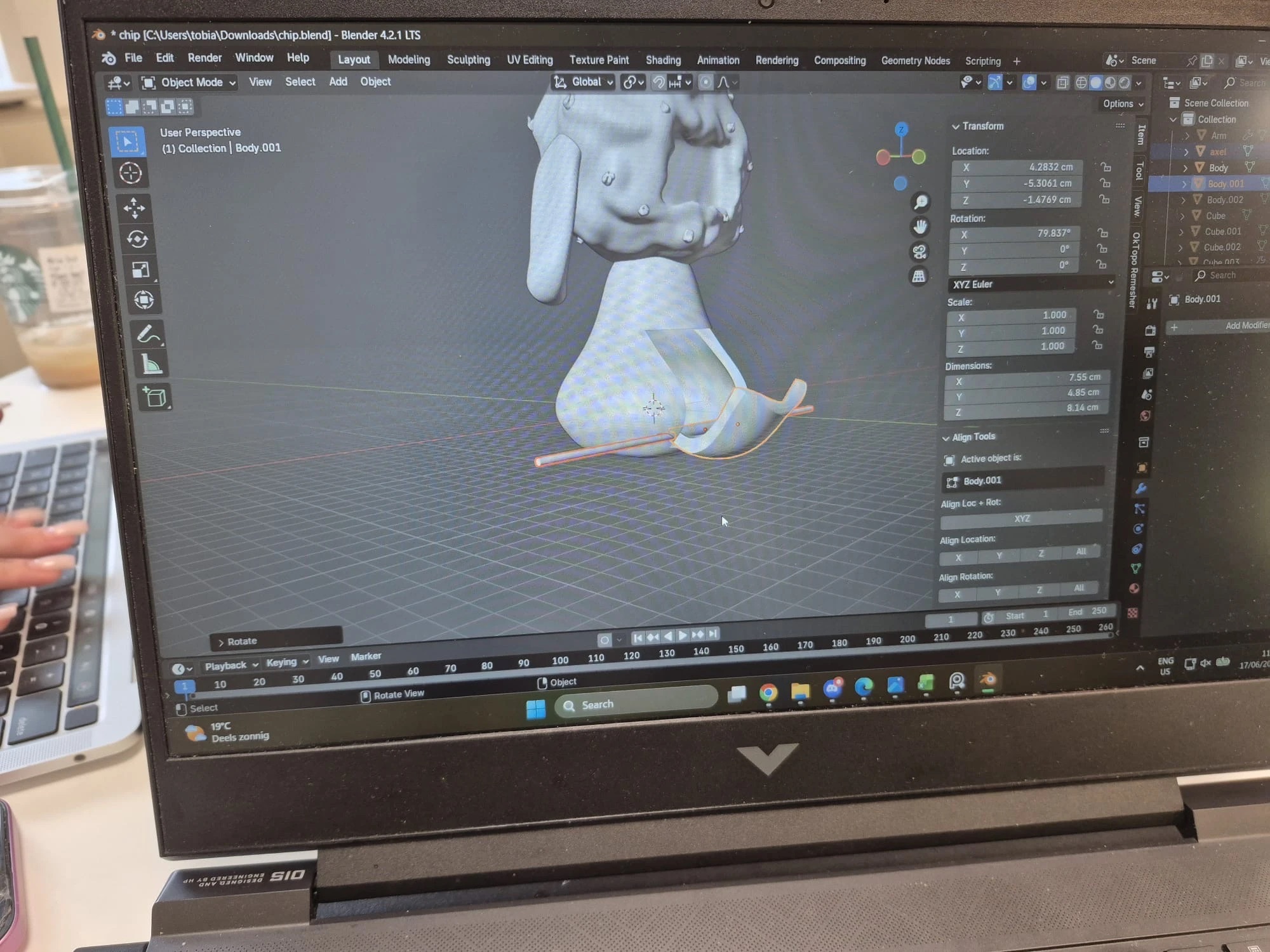
The first sketches and dot-voting in Figma took about an hour. A rough 3D model checked that the electronics fit inside a plush body before anything was bought. Then an early Chip went to a Friday expo, and watching people talk to it produced this list.
- →The wrinkle lines on the face were too busy, so they show only while Chip talks.
- →Chip talked with a closed mouth. Each mood now has mouth shapes for A, E, I, O and U.
- →The organs inside the belly looked flat, so they got a wet, glossy texture.
- →The voice sounded too old, and speech took over 4 seconds to generate on the device.
- →Chip looked frozen, so its ears now move even when nobody speaks.
Technology
What is inside
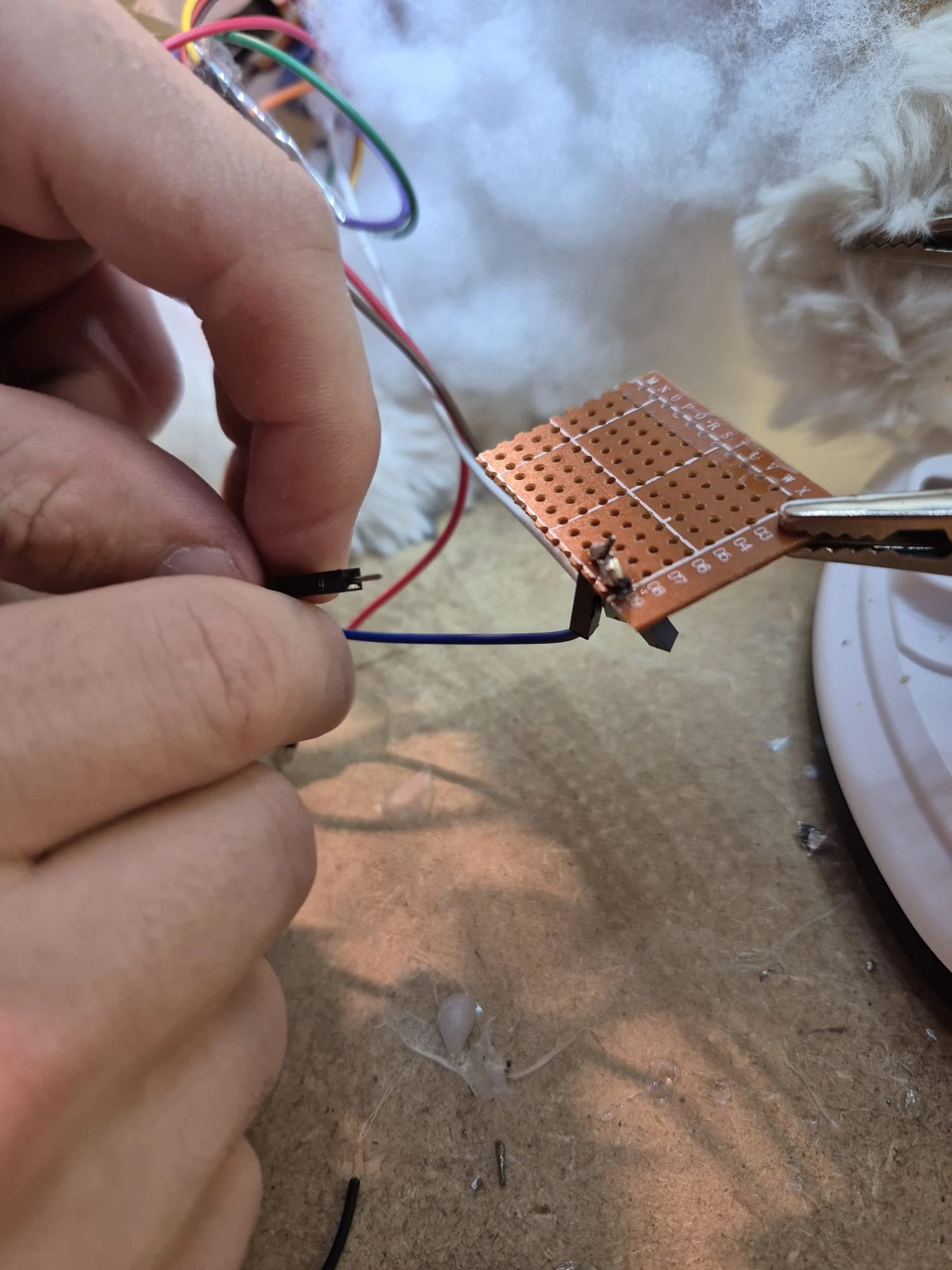
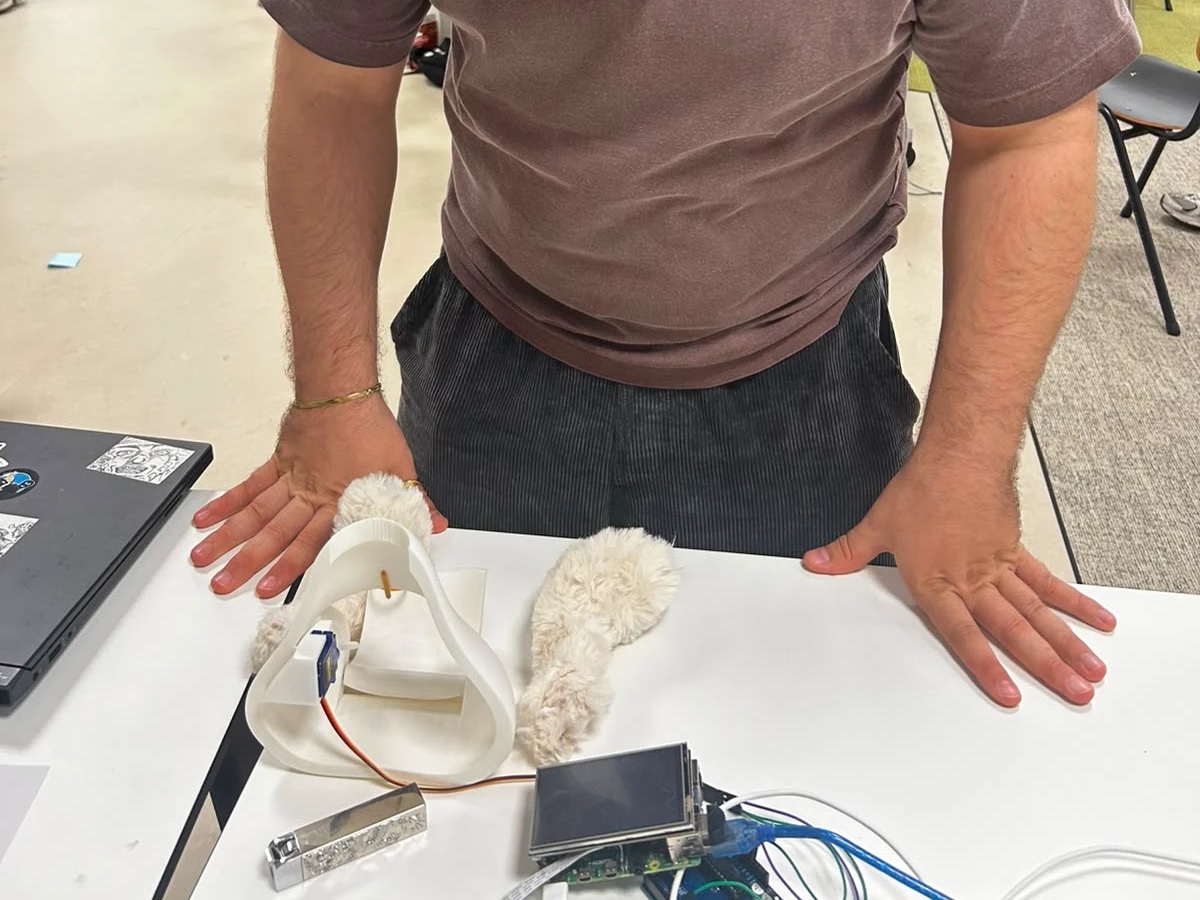
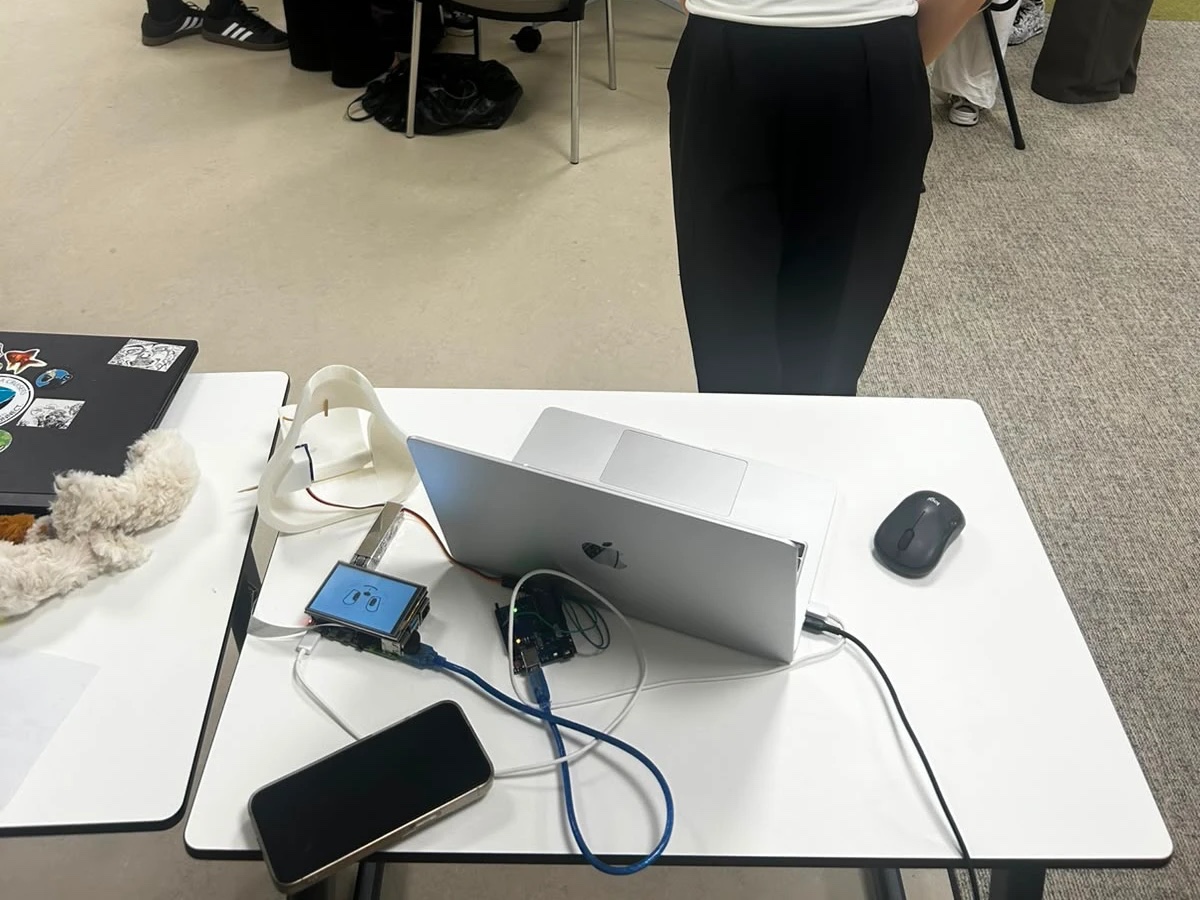
Chip runs on a Raspberry Pi 4B with a small camera and a USB microphone. Three servo motors move the two ears and open the belly hatch.
- →Face recognition remembers people who come back. DeepFace guesses mood, gender, age and ethnicity, YOLO counts people and spots objects, and OCR reads text and logos nearby.
- →Whisper turns speech into text.
- →A local language model in Ollama combines it all into one profile per person.
- →Chatterbox makes the voice on a separate laptop so the Pi stays fast, and a Flask dashboard shows every profile live.
Insights
What Chip shows on the screen
A new face gets a number first. When the visitor speaks, Chip asks for a name and from then on greets them with what it already knows.
- Profile 01
Social circle
Who the visitor came with, how they know each other and whether they might be a couple.
- Profile 02
Appearance
Clothing style and guesses about age, height, sex and race.
- Profile 03
Lifestyle
Guesses about everyday life, based on the objects and brands Chip can see.
Context
This already happens
Guesses like these are bought and sold. Data brokers pass such profiles to advertisers, insurers and employers, and the person rarely finds out. Clearview AI collected billions of face images without consent and sold access to them, until regulators in the US and UK stepped in.
Toys have been caught too.
- →My Friend Cayla, a talking doll, sent children’s conversations to an outside company. German authorities told parents to destroy it.
- →CloudPets, connected teddy bears, left 2.2 million voice messages from children open to anyone in 2017.
- →In 2018 the FTC fined VTech $650,000 for collecting children’s data without parental consent.
Outcome
How people reacted
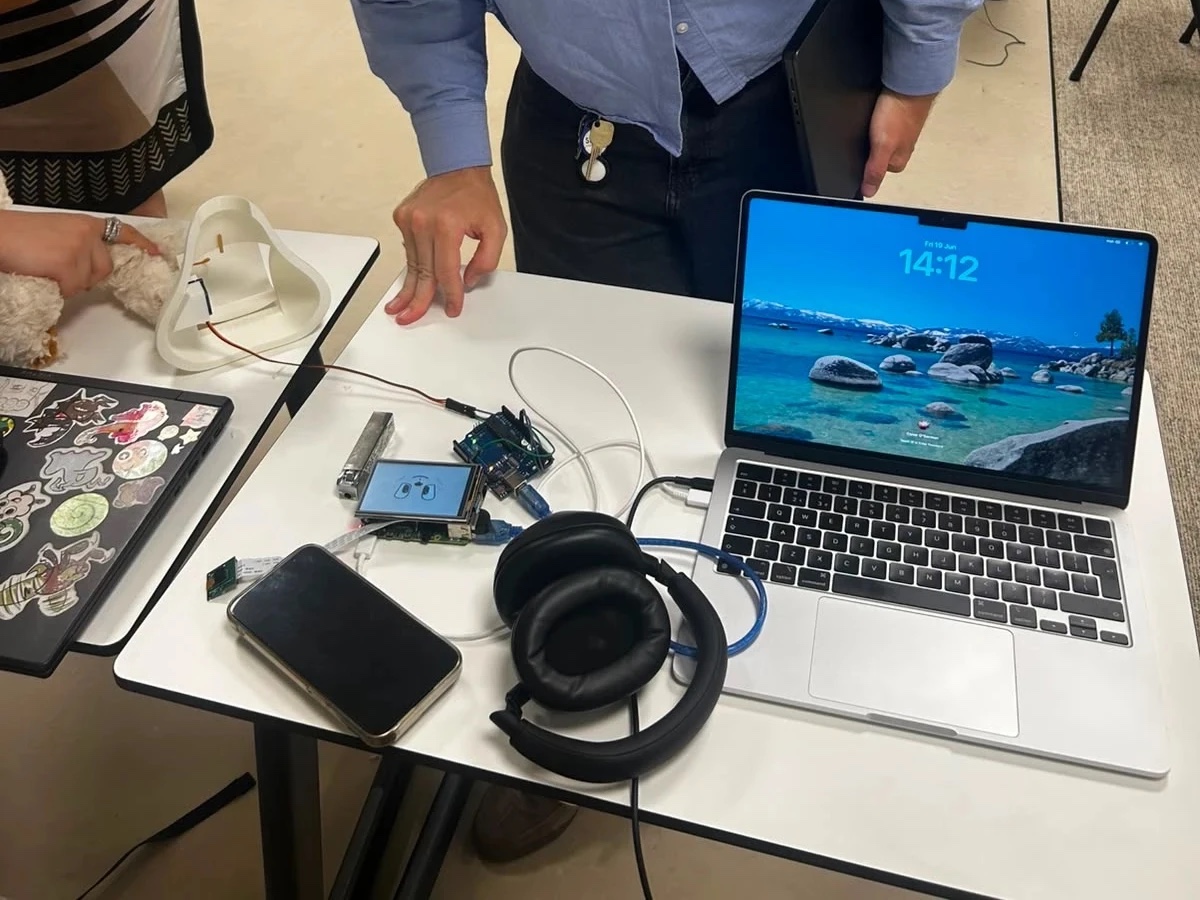
People laughed and chatted until the belly opened. After only a few minutes many looked uneasy at their own profile. That was the goal: they took the risk seriously because the data was theirs.
What I learned
What I took from it
- 01A friendly look builds trust, and trust helps a critical message land.
- 02One style across the toy, the box, the poster, the screen and the table makes it feel like one world.
- 03An exhibition has an order: how people walk up, what they read first, when the reveal happens.
- 04A small screen, three motors and slow speech limit what is possible.
- 05One expo with an early version taught more than guesswork.
- 06People take a risk seriously when they see their own data.