
← All workCase 02 / 032026
Design for Safety
A co-design project with the Municipality of Delft about a dark, industrial road, and how to make it feel safe for girls and women walking home at night.
- Project
- Public space, co-design
- Duration
- 6 months
- My role
- Research, co-design, concepts, prototype and testing, posters, report
- Team
- A group project, five people
- Client
- THUAS × Municipality of Delft
- Stages
- Empathise, Define, Ideate, Prototype, Test
- Methods
- Co-design, interviews, observation, prototyping
Problem
Fine in the day, uncomfortable at night
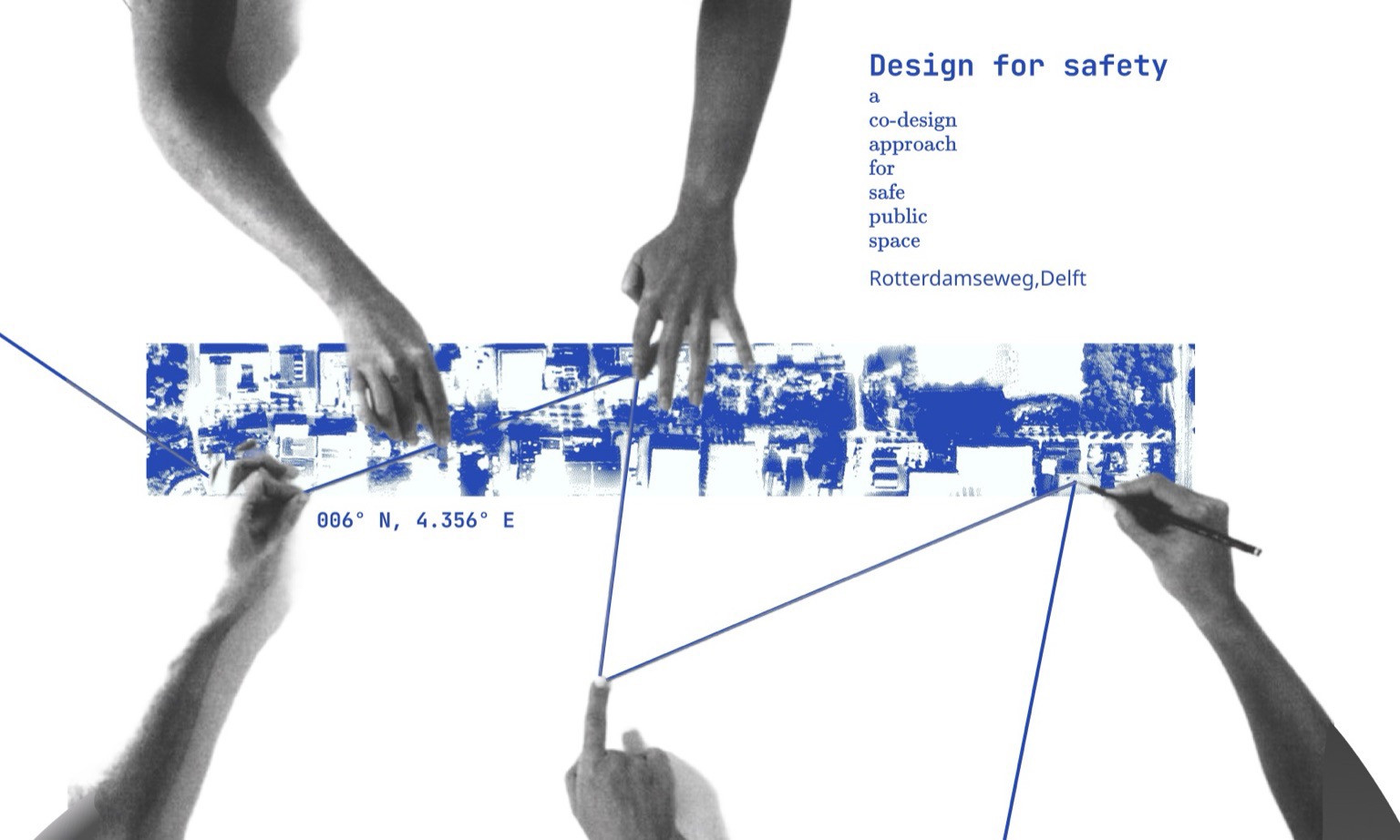
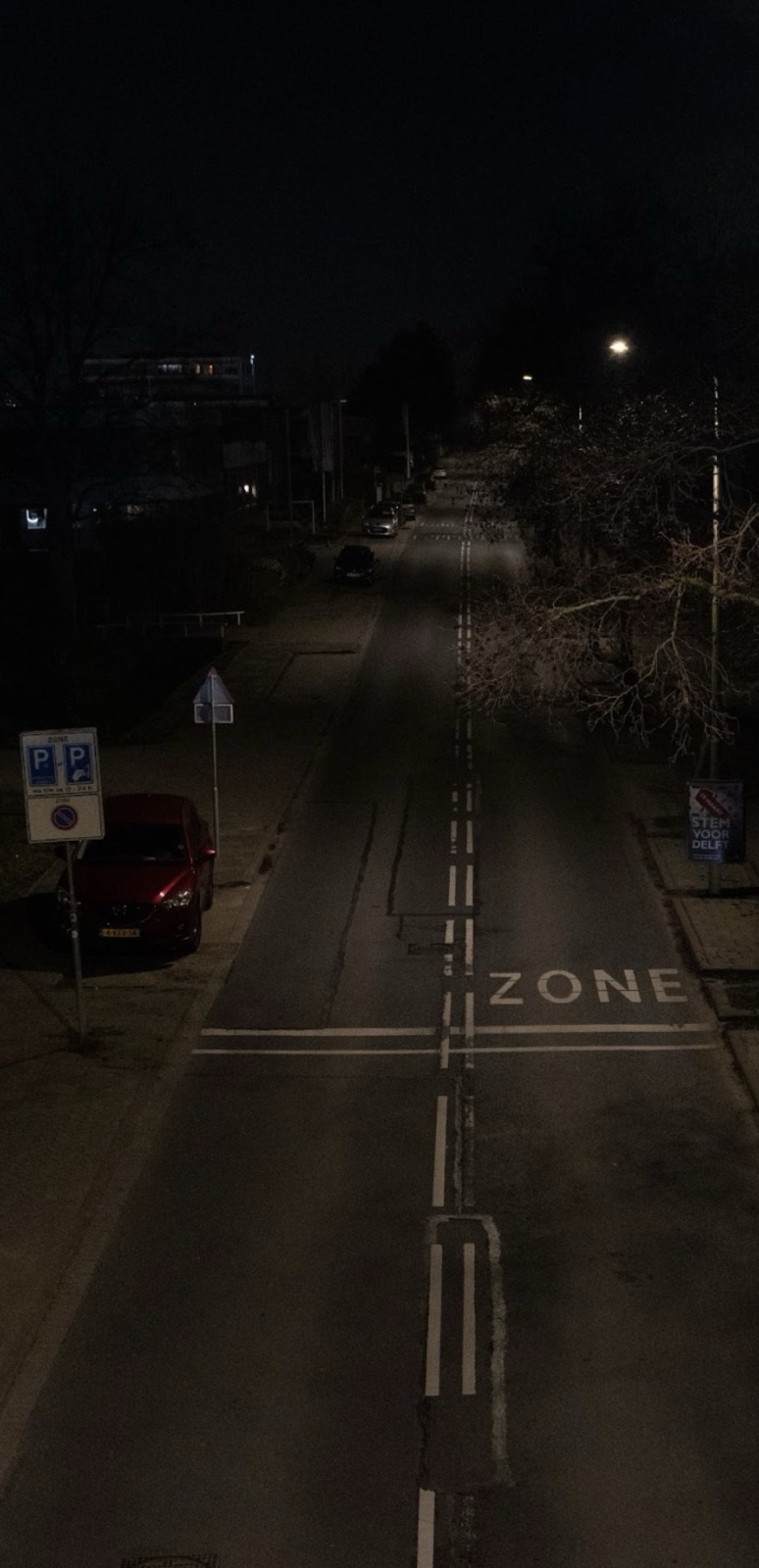
Rotterdamseweg in Delft connects the universities with student housing, so many students use it every day. On paper the street works, with a road, a bike path and streetlights. But when we asked people about it, many said it felt uncomfortable, especially in the evening.
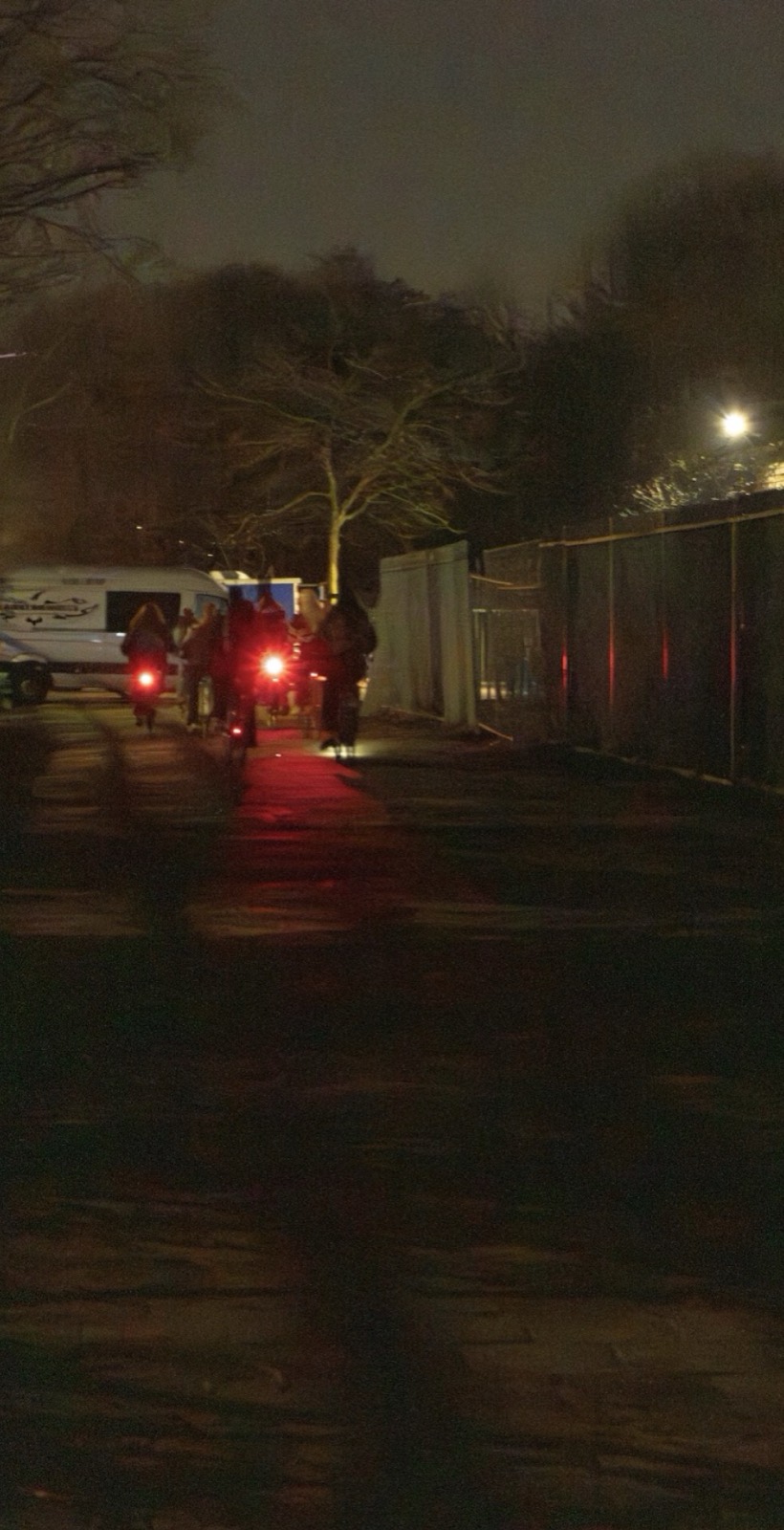
They called it dark, empty and poorly maintained. Some had changed how they travel because of it. They cycled faster, stayed on guard, avoided certain parts or took a longer route home.
The Municipality of Delft and our lecturer asked us how to make girls and women feel safer here. We soon saw that there was no single dangerous spot to fix. How safe people felt depended on where they were, how far they could see and whether anyone else was around.
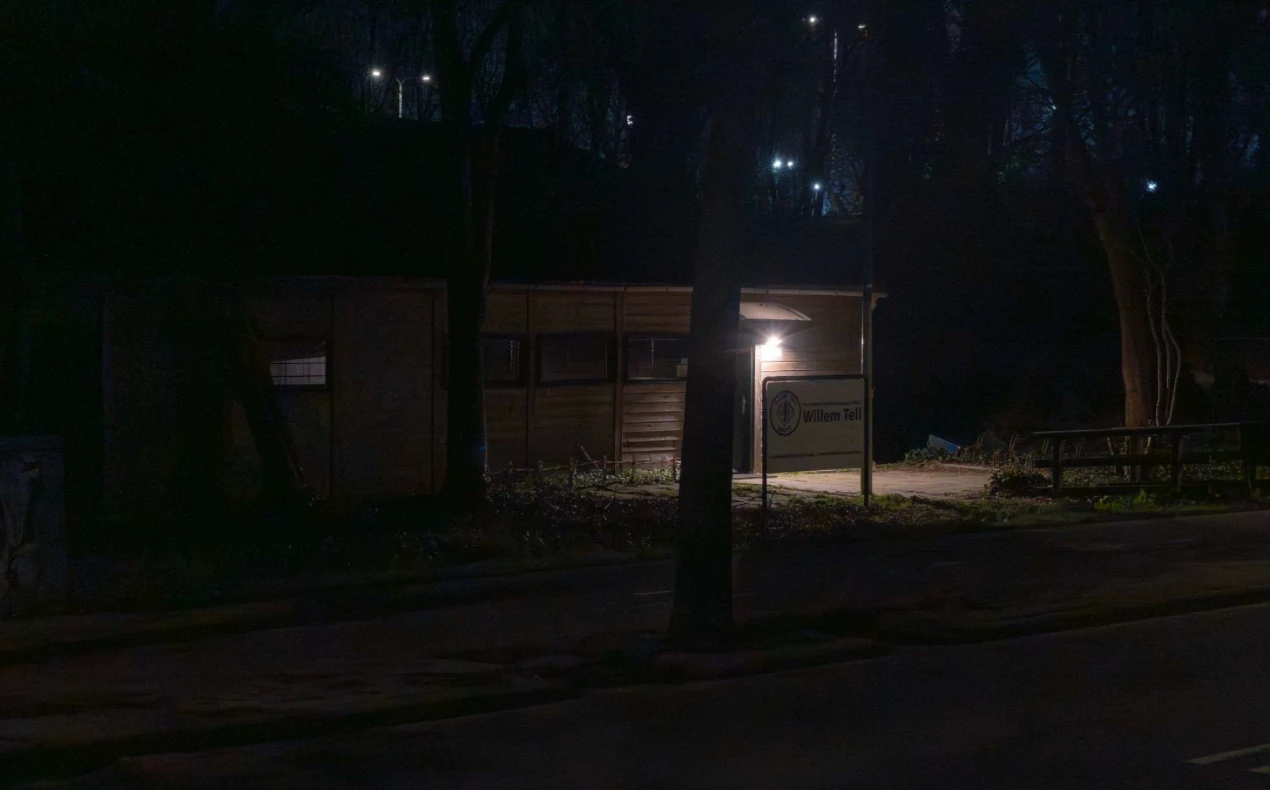
Is it only about more streetlights, or does the whole atmosphere of a street decide how safe it feels?
My approach
Understand first, then design
We were a team of five and the project ran for six months. I worked on every stage except the design video, from the street research to the posters and the report.
My own focus was the research, and turning what we found into a direction for the design.
We chose co-design because the people who use the street know it best. They took part from the first interviews to the final test, and the design grew out of what they told us.
Solution
What we ended up with
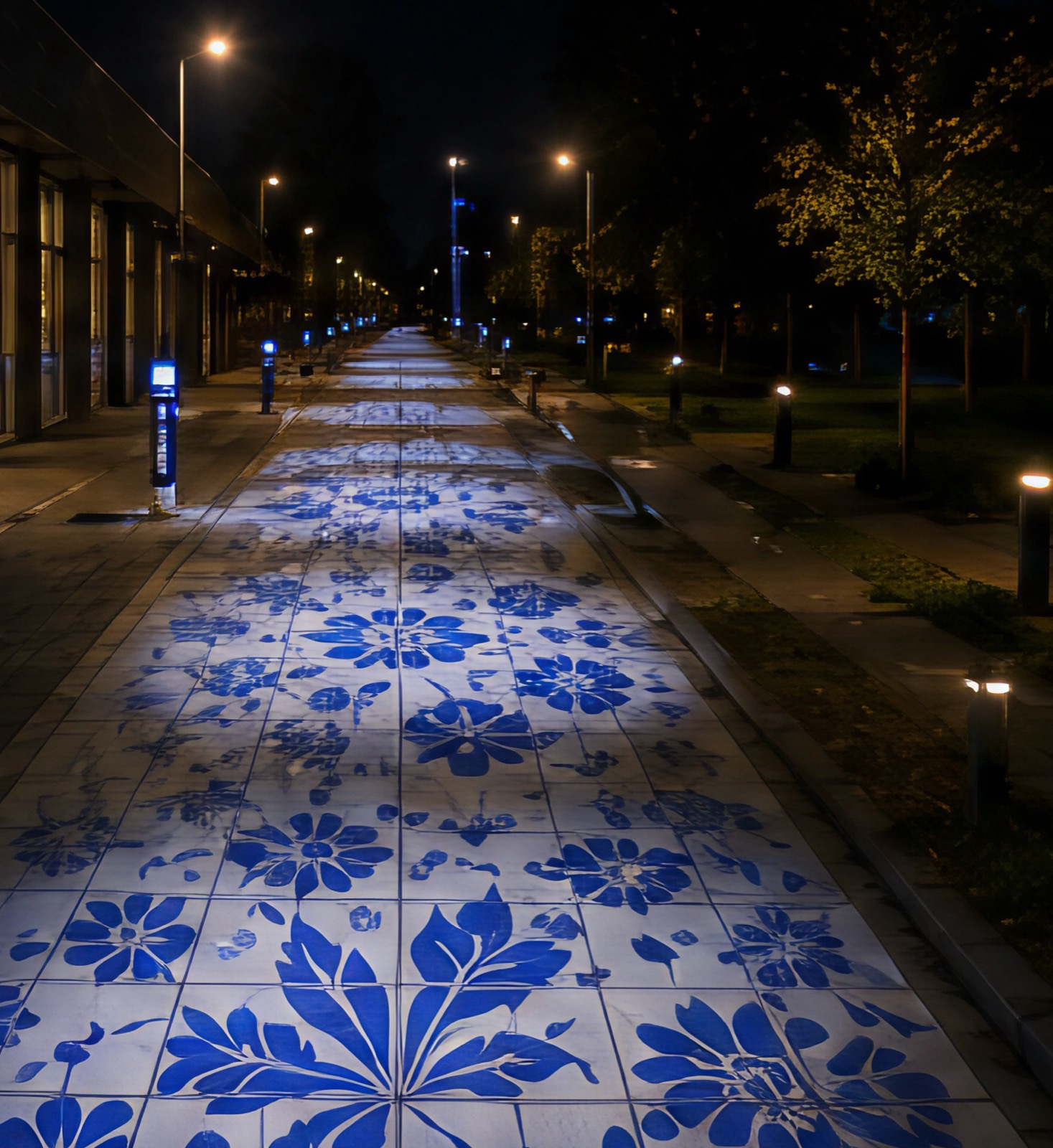
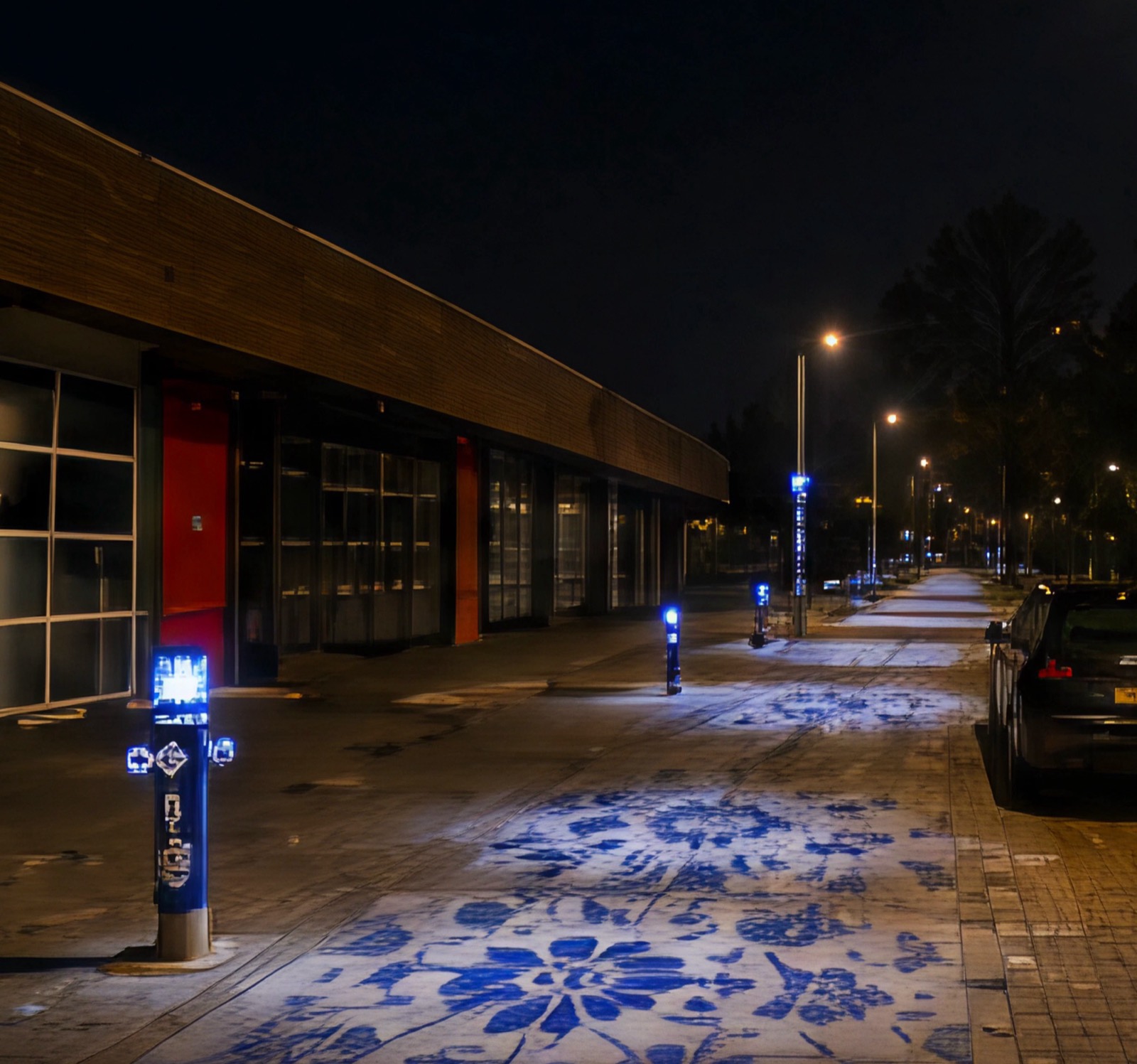
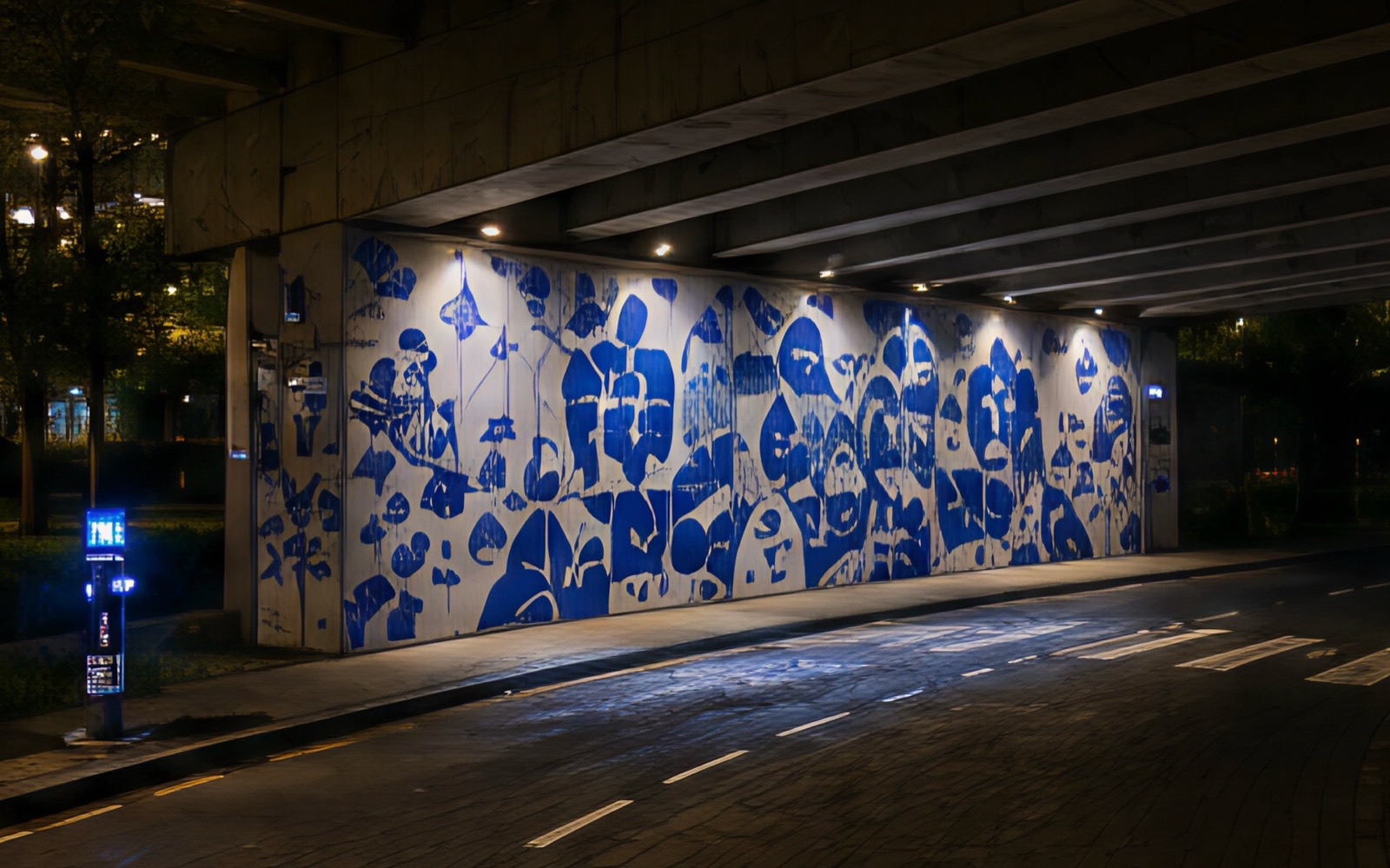
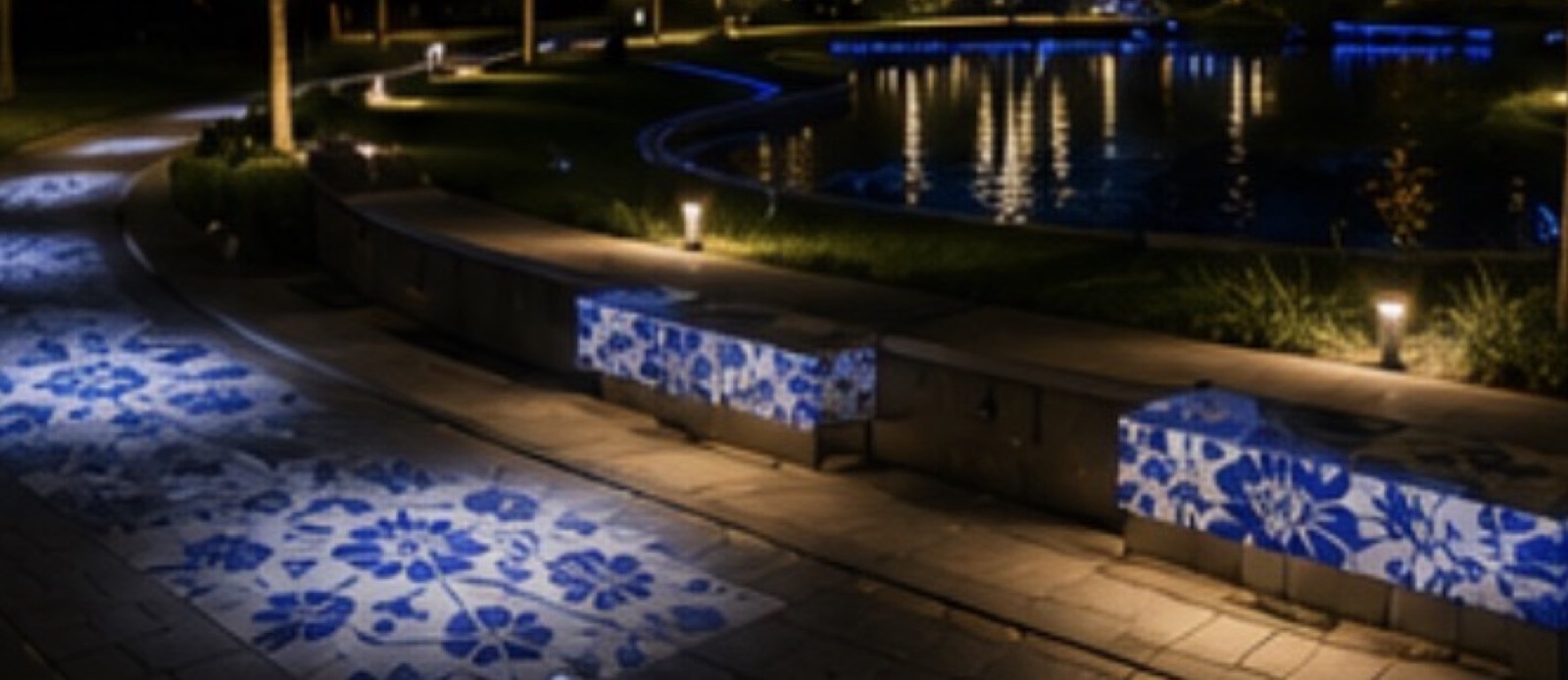
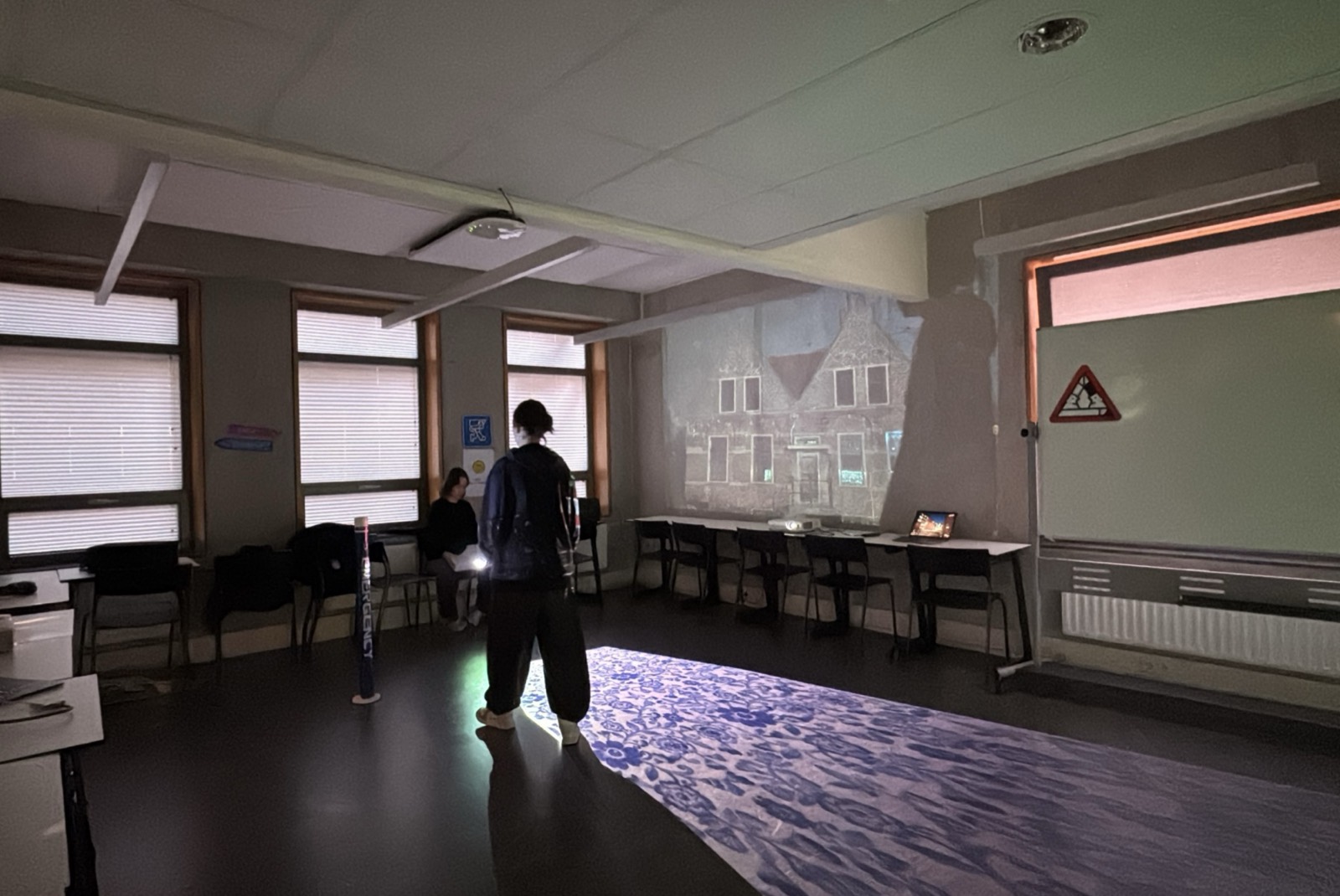
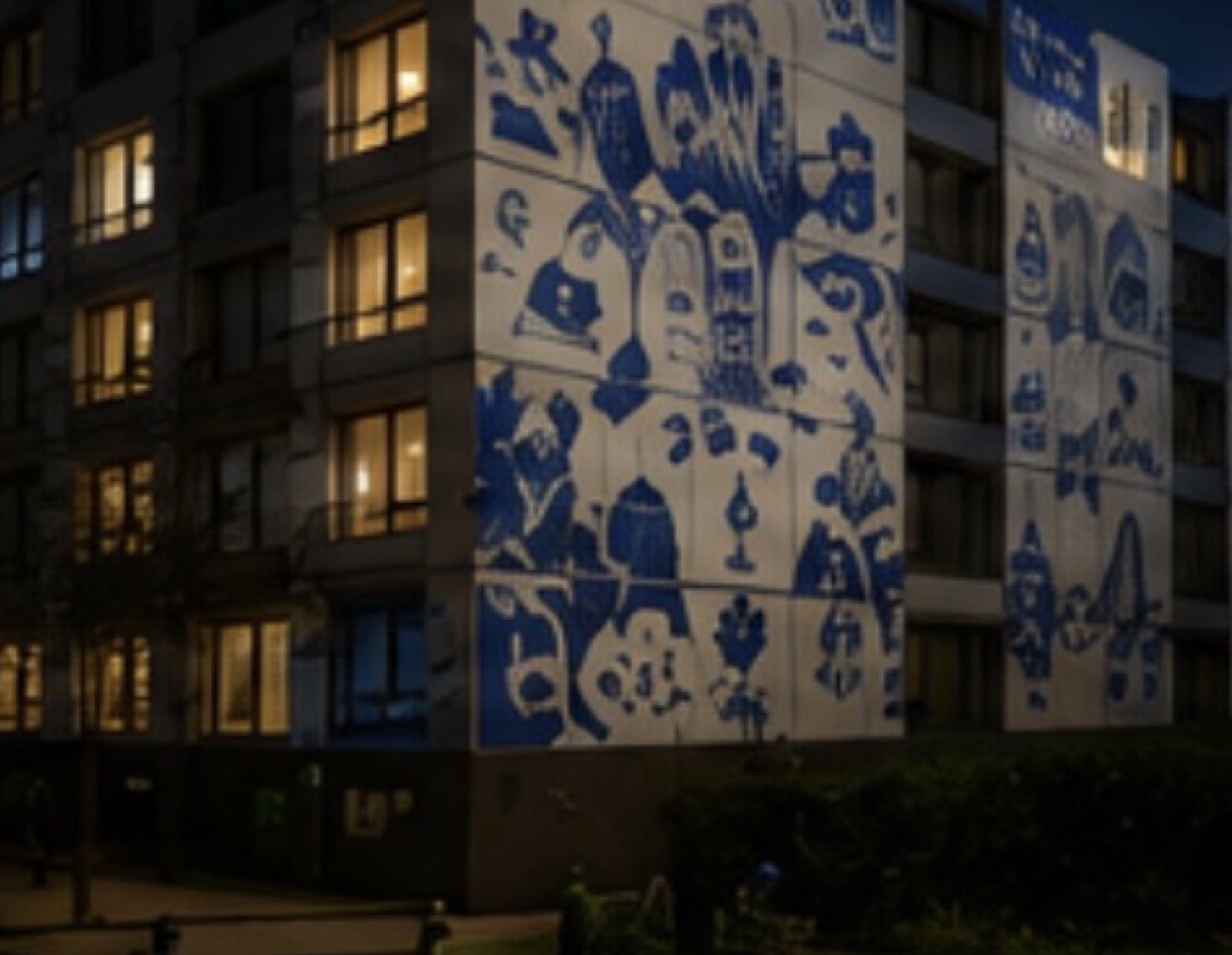
Our design brings Delft Blue, the blue-and-white tile pattern Delft is known for, to the whole street. At night, light projections of the pattern on the path show people the way. People told us that a place that looks cared for feels safer, and the pattern makes the street look cared for.
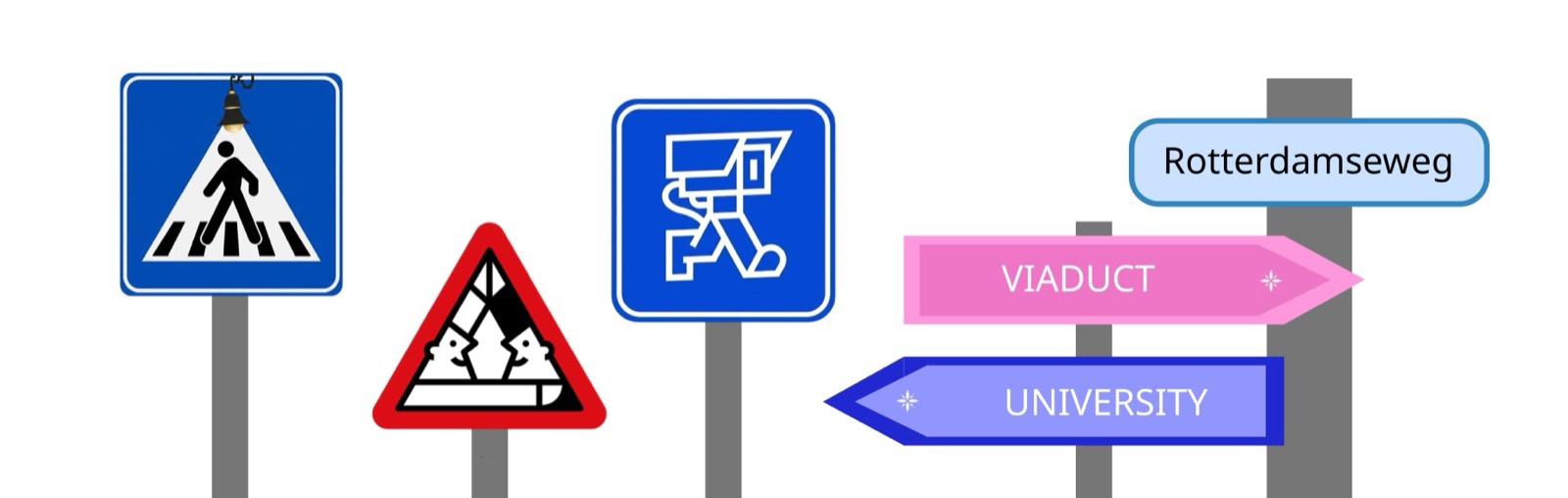
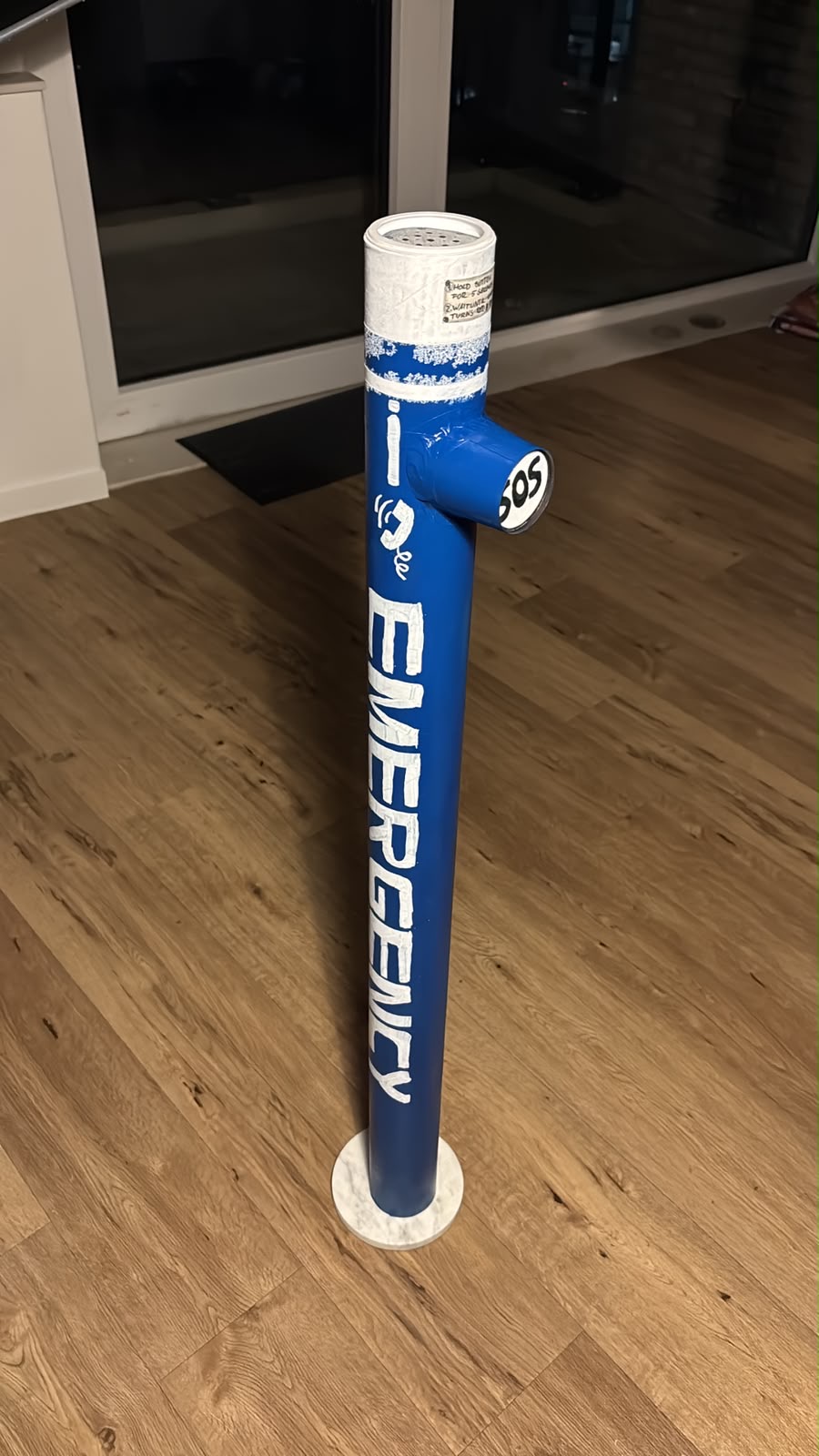
The design is a set of small changes that work together. It includes Delft Blue patterns and murals, clear signs, a green area with benches, better lighting, a clearer bike path and safer crossings. Emergency poles are there as a last resort.
Discover
Walking the street, day and night
We wanted to find out what makes people, especially girls and women, feel safe or unsafe on Rotterdamseweg. We looked at how the space itself affects comfort and visibility, and at how the street could become a place where people like to spend time.
Research questions
- Q1What is necessary for women to feel safe in an urban setting?
- Q2What makes an urban space seem or feel unsafe?
- Q3Why are some streets or routes preferred over others, regardless of distance?
After a meeting with the client and some desk research, we went out into the street. We interviewed 17 people walking and cycling there between 10:00 and 21:00, so we heard about the street in daylight and after dark. On a night walk we experienced it ourselves, and a survey added 12 more responses.
Synthesis
From 146 data cards to four personas
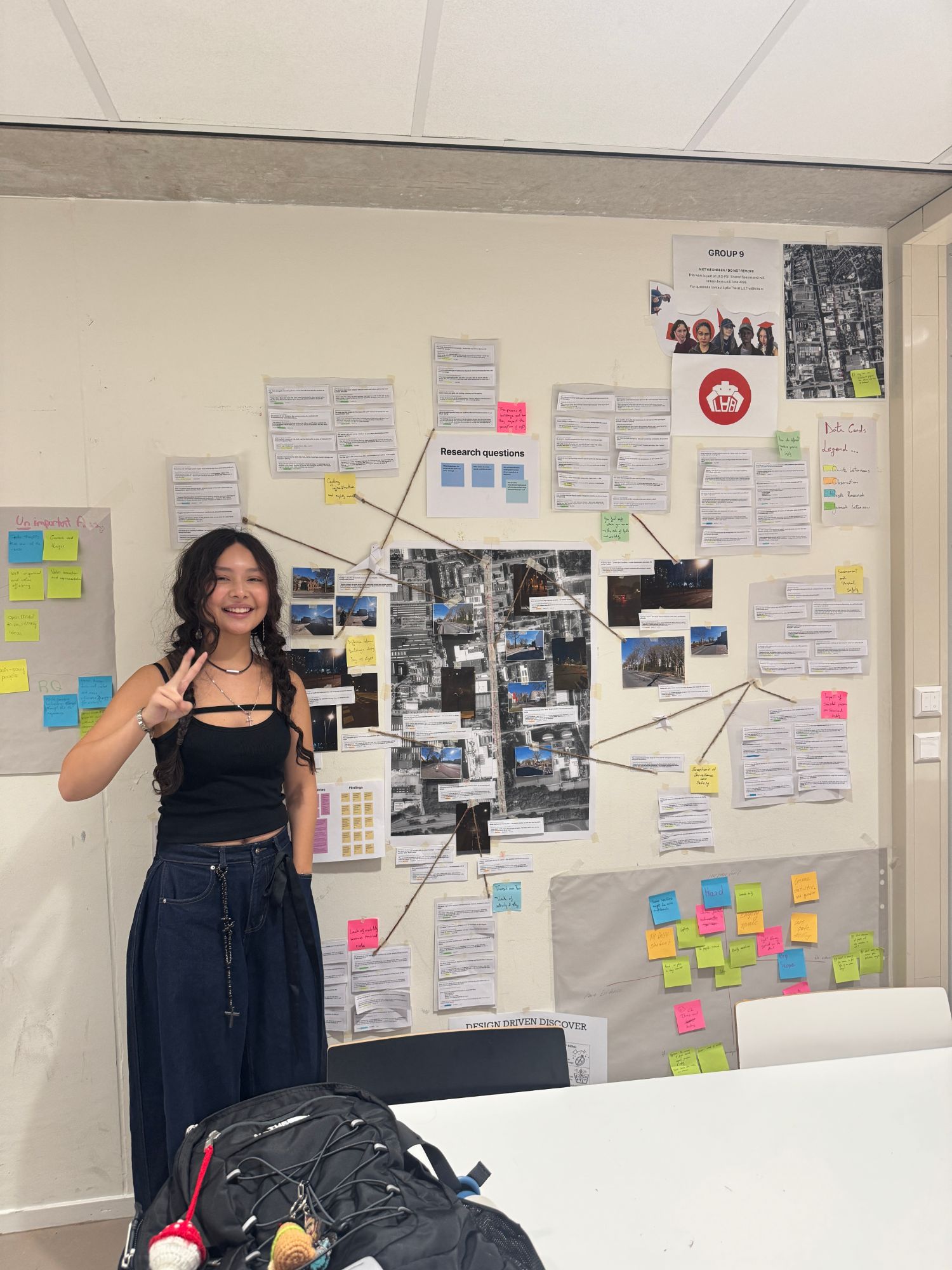
Every quote and observation went on a data card, 146 in total, and we grouped the cards on a wall to find patterns.
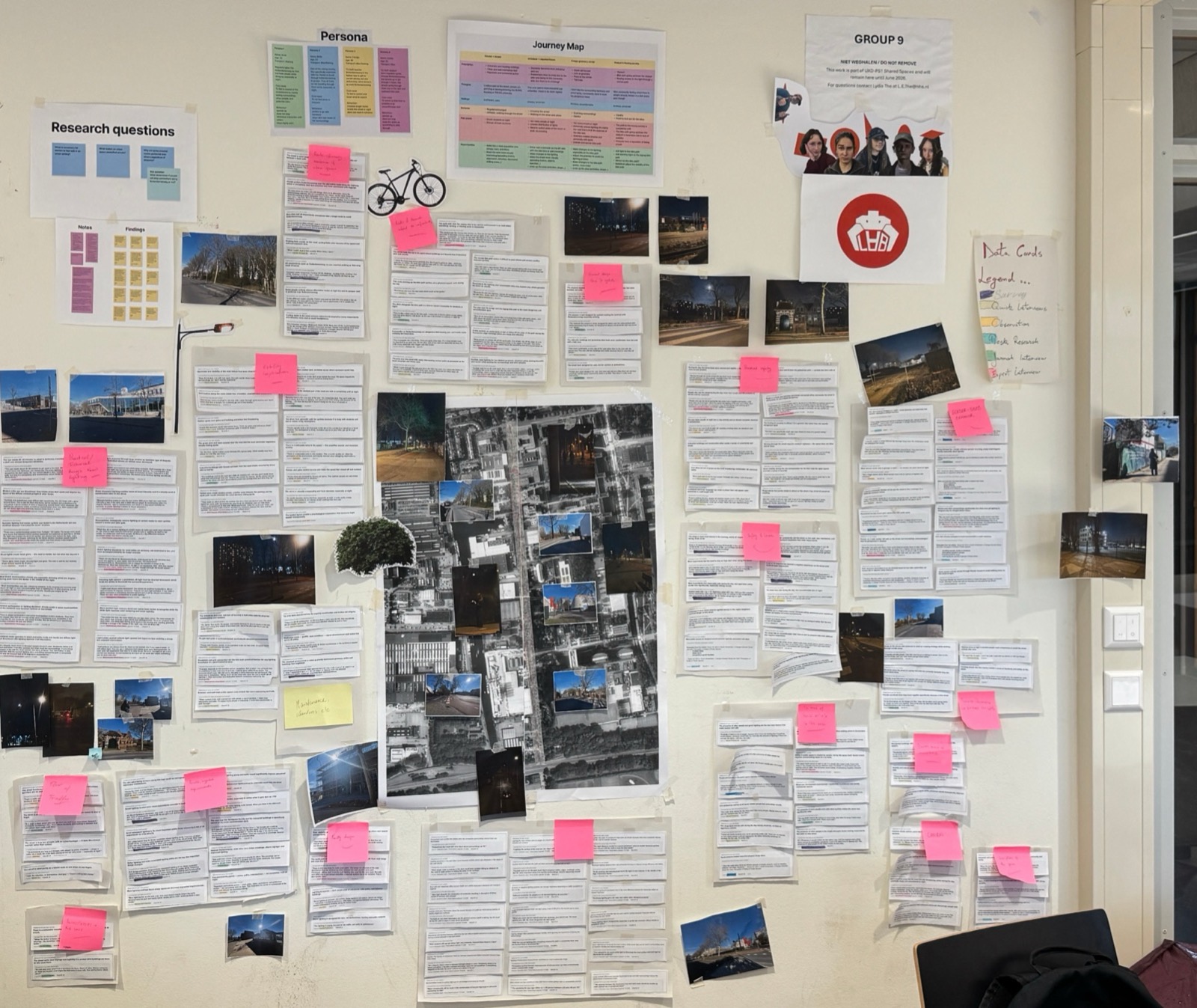
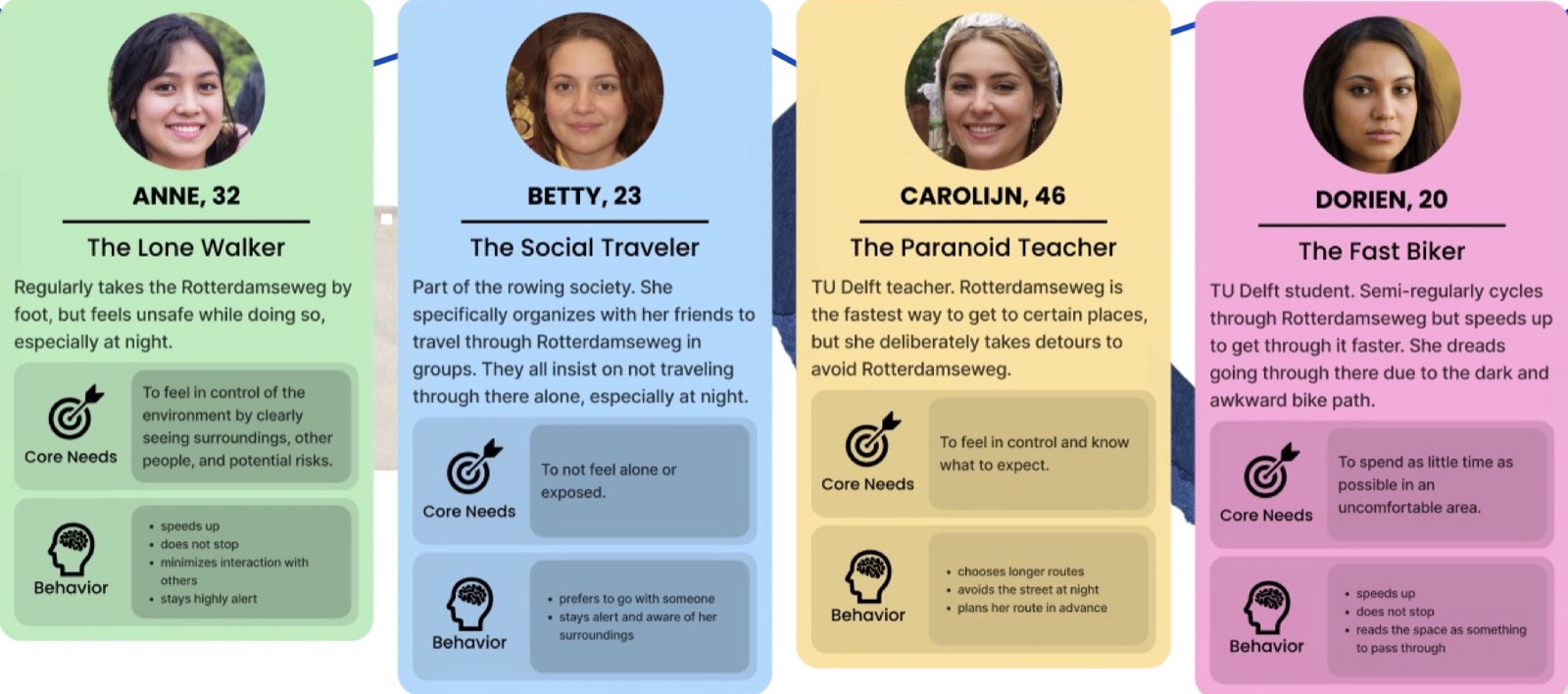
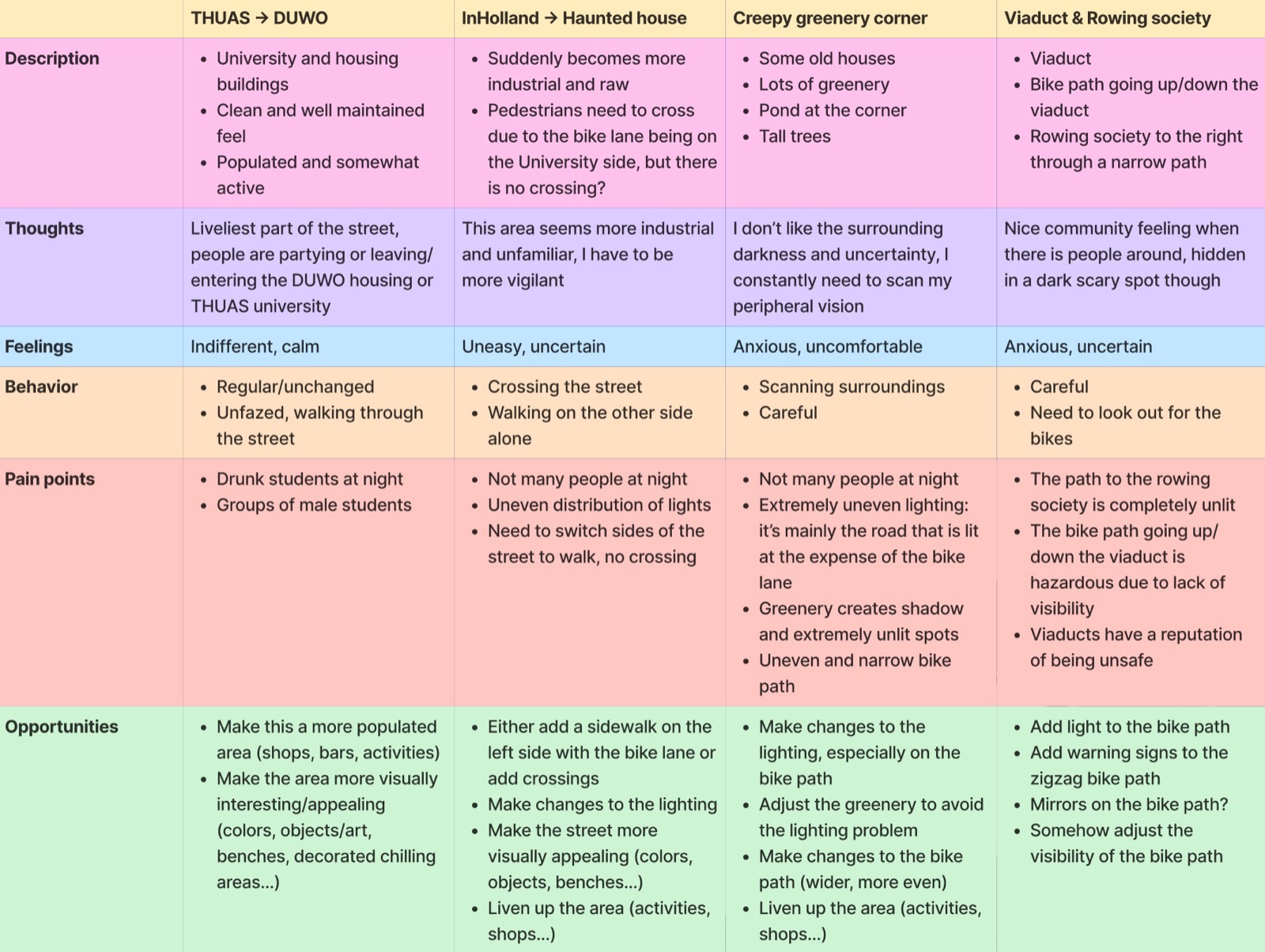
From the patterns we built four personas who use the street in different ways: the Lone Walker, the Social Traveler, the Paranoid Teacher and the Fast Biker. A journey map shows how their feelings change along four parts of the street.
Insights
What we found
- Insight 01
Empty streets feel unsafe
When nobody is around, there is nobody to help if something happens.
- Insight 02
People want to know where they are
Hidden corners and dark stretches make it hard to see what comes next.
- Insight 03
Other people help
Even strangers nearby make the route feel calmer.
- Insight 04
A cared-for place feels safer
When a street looks neglected, people feel less safe there.
These insights led to one goal for the design.
A street that feels calm at night, so women and female students can walk home without being on guard the whole time.
Ideate
Three ideas
We started with a brain dump, sorted the ideas in a mind map and made collages to try out the look of each direction. Three concepts came out of this.
- Concept 01
Living Light Street
Lighting that guides people.
- Concept 02
Chill & Greenery
A park with benches, so people stay.
- Concept 03
A Creative & Colorful Experience
Colour and identity that show care.
Chosen
We chose the third concept because it answers our strongest insight, that a place which looks cared for feels safe. The Delft Blue museum is on Rotterdamseweg itself, so we used Delft Blue in every part of the design, from the projections to the emergency poles.
Prototype & test
Rebuilding the street in a classroom
We started with a cardboard model, but it couldn't show how the street feels in the dark. So we blacked out a classroom and rebuilt Rotterdamseweg with three projectors, once as it is today and once with our design.
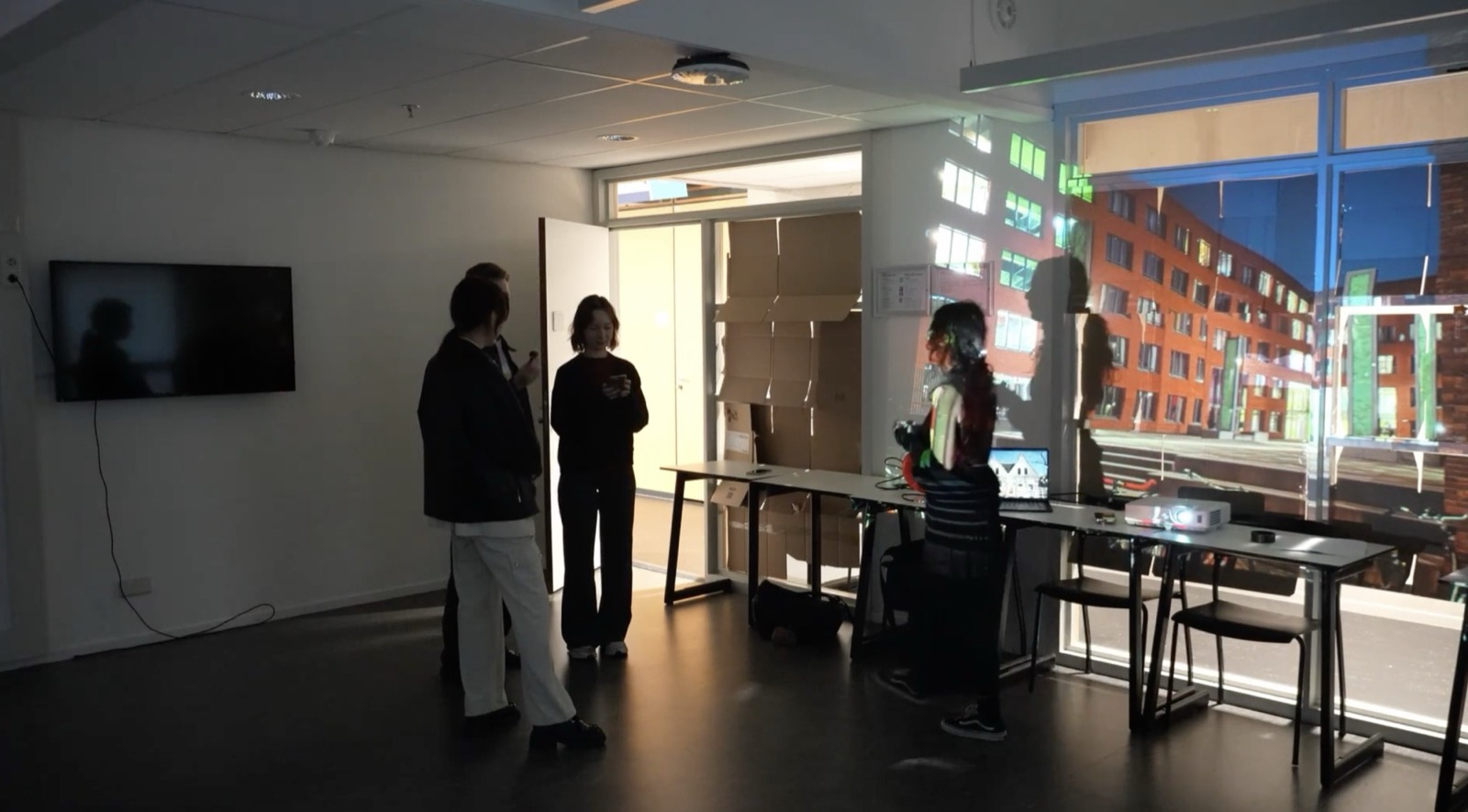
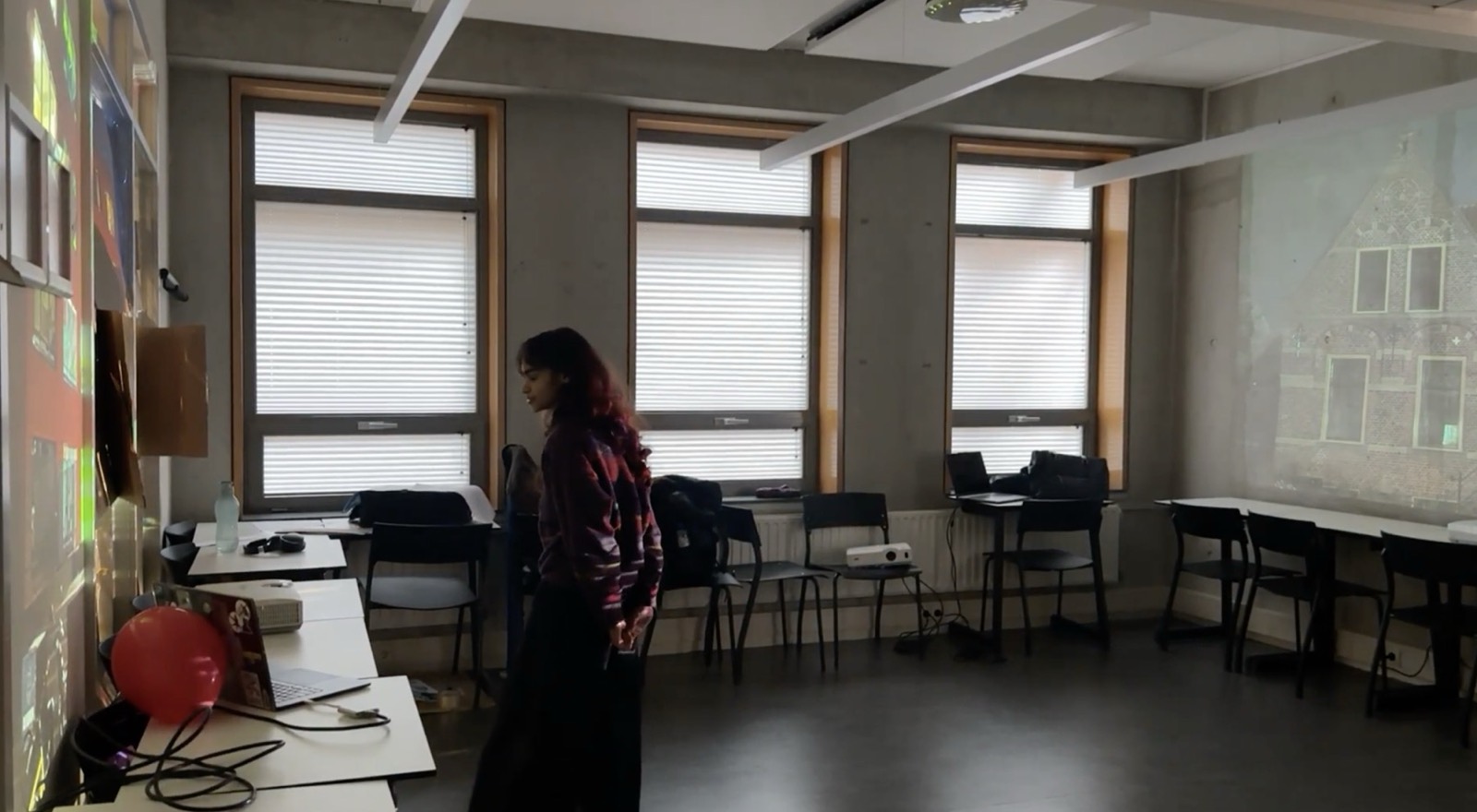
Five female students aged 18 to 25 walked through both versions, and we interviewed each of them afterwards. To them the street as it is felt dark and empty, and the new version felt calmer and looked after. Their feedback changed three things in the design.
- →The emergency pole now reacts in 2 to 3 seconds. Before, it took 5.
- →The pole became the last layer of the design. The rest of the street should make people feel safe long before they need help.
- →The Delft Blue projections now also guide people along the path.
What I learned
What I can do now
- 01I interviewed people walking and cycling on the street, joined the night walk and the survey, and wrote down what I saw.
- 02I put 146 data cards on a wall, grouped them, and built personas and a journey map from the groups.
- 03Together we went from many ideas to three concepts, and then to one.
- 04I helped turn a cardboard model into a darkened classroom with three projectors, so people could walk through the street.
- 05I learned to set a test goal first, then watch and interview the participants and change the design based on what they said.
- 06In a team of five I learned to share the work, keep the main goal in sight, and make posters and a report that tell the same story.